Lessons from Darwin — and why we must bolster the values of science and truth.

In the hallway of London’s Natural History Museum is a statue of Charles Darwin, perhaps the most influential scientist of all time.  His On the Origin of Species changed our understanding of the natural world, reshaped religious beliefs, and (for all except a few creationist cranks) has become part of the core curriculum of human knowledge. Indeed, so great is his fame, that when I last visited the museum, there were several people taking selfies with his image.   

Perhaps that’s because, unlike many other complex discoveries, Darwin’s theory of evolution is easily communicable and widely understood in layman’s terms. And yet, despite this (or perhaps because of it), he harbored grave concern for any misrepresentation and reputedly delayed its publication for almost thirty years. More recent historical research suggests the hiatus was equally the result of his determination to ensure its accuracy, combined with a robustness of evidence.

How things have changed in the decades since! 

Celebrities and Pseudo-Science

Hollywood can be a Poor Example

A short walk from the museum is Harvey Nichols department store, which, until the recent pandemic, housed a concession from a famous Hollywood backed company, the alternative lifestyle and wellness store founded by that is only a famous actress.  There, in its cool minimalist surroundings, you could buy all manner of craziness, from bee sting therapy to bodily insertions that promote longevity and a better life.  The store may have gone, but the peddling of pseudo-science continues to thrive online, as does a more general monetization and politicization of unfounded assertions masquerading as truth.

This Hollywood actress’s ability to persuade otherwise sensible folk to part with their hard-earned cash is surely a result of her being a famous and attractive actress. The implication that in purchasing from the store, you might become a little more like her image is central to the appeal. Given that the business has been valued at over $250m, it would seem this is more important to many than any analysis of the snake oil she’s selling or her qualifications for doing so. And sadly, she’s not alone. 

Great Tennis Player, but is he qualified in other things?

Many sports stars have millions social media followers. One in particular is arguably one of the greatest tennis player of all time, but it seems that’s not enough for his ego. Hence, we’re treated to his views on using the energy of our body to cure ailments and how polluted water might be purified through the power of gratitude! As for his qualifications? This is a man who organized a tennis tournament during the Covid pandemic and, if only by implication, suggested that people do not need a life-saving vaccination against the consequences of a pathogen that the World Health Organization estimates has killed seven million people.

More Examples of Bad Influencers

The examples above are relatively mild in the scheme of the critical depths to which we’ve sunk. Consider for a moment the impact of the alt-right’s Alex Jones, a man who denied the reality of the Sandy Hook murders. And while you do so, maybe spare a thought for those parents who, after having lost their children in that attack, were relentlessly harassed by his mindless followers as the US courts have thankfully recognized, his mendacious and unfounded tirades are not without consequence and should not be tolerated. There are any number of equally (and arguably more) dangerous influencers I might have highlighted, from Trump to Musk to the truly vile Andrew Tate… 

Fake News and False Truths are Threats to Everyone

But the key point will already be understood: the proliferation of fake news and false truths is one of the most serious threats to our society.  The erosion of our ability to separate fact from fiction is not just impacting those with more cash than sense; it’s undermining our politics, our health care, and in the case of the alt-right and the extreme left, a large portion of our decency and common sense! 

But if disinformation is now dominating our public debate, the question is, what do we do about it?  How, in a world where, for example, 62% of Americans get their news from social media, do we balance the value of free speech with a need for the vetting of untruths?  And how do we counter the seductive appeals to base emotions and bigotry that are so easy to stir up and yet so difficult to refute in a culture that’s increasingly shaped by the intolerance of identity politics?

Regulation is Needed

There is surely a role for regulation here. While recognizing it’s a minefield, I believe we must embrace more robust guidelines for public discourse and be prepared to enforce them, especially in fields that directly impact public health or political processes. This isn’t about Big Brother censorship; it’s about recognizing that the freedoms we have fought so hard to secure require us to insist on core values of truth, mutual respect, and fairness. The alternative is that we continue to tolerate a toxic cocktail of pseudo-science, hate speech, and violent rhetoric, and that’s been the hallmark of despotic regimes throughout history. 

But regulation is not enough, nor should it go too far. 

As a liberal with an academic background, I’d be one of the last to want to curtail a robust exchange of views. Indeed, it’s a virtue of science that it takes pride in testing, vigorously challenging, and, where necessary, changing its opinion. This is why, more than ever, we need to promote critical literacy in our schools, with an emphasis on the process as much as the outputs. In France, philosophy is part of the core curriculum, not to impose a particular dogma but rather to encourage debate and help young people distinguish between credible claims and unfounded assertions. We could learn a lot from that mindset. 

Meanwhile, we could take a lesson from Charles Darwin. His search for the truth was a model of evidential diligence; his self-refection and care for the consequences of his words were the antithesis of today’s unqualified and narcissistic celebrities. It’s no coincidence, and, to my mind, a matter of great hope, that he’s arguably the greatest social influencer of all time.  We should all salute him (or take selfies by his statue), for in that respect alone, his example is as relevant and as radical today as when his likeness was first set in stone.

Light on the Horizon

Originally Published in Fair Value

ON 8 DECEMBER 2020 in the city of Coventry in the UK, Margaret Kennan received the first publicly administered dose of the Pfizer/ BioNTech vaccine. At ninety-one years old, she described the experience as “the best early birthday present,” reflecting worldwide joy that, just possibly, this marked the beginning of the end of the COVID-19 pandemic. As I write, three weeks later, millions across the globe have been inoculated, markets have rebounded and we approach the New Year with rays of light that were well below the horizon only a few months ago.

And yet, dark clouds remain. Because, for all that the vaccine— and equivalent treatments from other biotech companies were a triumph of science before the first shot was administered there were protestations from some quarters. Fueled by social media, conspiracy theorists played on the fears of an already nervous population, peddling claims at times so ludicrous that they beggar belief. In what is almost the ultimate case of repeating your message regardless, they’ve succeeded in spooking a small but not insubstantial section of the public into questioning whether they might skip the treatment just when it’s needed most.

Wild Speculative Theories Continue

There are multiple issues at play here, and not the time or space to deal with them all. I’m going to consign claims that the vaccine will track us via 5G communication or harbors secretly implanted microchips to the dustbin of implausibility in which they belong. Whether we should allow airtime to such theories strikes me as a fine balance between freedom of expression versus the potential for public harm. Time will no doubt expose the nonsense, but sadly it seems there will always be some who choose to disregard the common-sense reasoning by which they lead their daily lives.

More concerning than the unhinged conspirators, are the mumblings that the vaccines are medically unsafe, that they’ve been developed too quickly, and the safest route is to pass on the treatment. What we have here is the consequence of a not unreasonable first question (can a vaccine be developed in under a year?) combined with a mistrust of our political leaders and a misunderstanding of science, to produce a spiral of doubt that risks undermining the whole enterprise. Or putting the whole thing more bluntly, we have a highly vocal section of society that wants the pandemic to end but prefers to hang back in the line, leaving the putative risk to others. 

Academic Term Free-riding

This is classic free-riding, a term usually reserved for scholars, but which most of us know as not pulling your weight. In academic terms, freeriding occurs when a party makes no contribution to an enterprise but reaps the same benefits as those whose labor and sacrifice made it possible. Economists regard this as a market failure; philosophers consider it a moral one. To understand why, it’s helpful to describe it in more concrete terms.

Free-ridding Economic Context

Imagine you lived in a small pre-industrial agrarian community that needed to irrigate its lands to improve production. All the farmers agree to work together to create a series of ditches and channels, giving two days of labor each week in a collective endeavor to deliver a benefit for all. Except, when work begins, one farmer, whose land is in the middle of the project, decides not to take part, focusing instead on building a swanky new house. When the irrigation system is in place, his land benefits, and his production increases just the same as the others, and yet, had everyone followed his behavior, the project would not have been possible.

Intuitively we know this is wrong. This is why John Rawles in his seminal Theory of Justice identifies a prohibition on crude freeriding as one of the key principles of a fair society-basing this assertion is not just on abstract reasoning, but on focus group after focus group coming to exactly the same conclusion. In the everyday world, it’s an economic and social problem that we’ve developed multiple routes (from taxation to copyright laws) to tackle. But when it comes to medical interventions, we hesitate at compulsion to comply.

Free-riding and Medical Free Choice

And that’s understandable because medical procedures raise some especially difficult issues. Questions of free choice and even religious belief come into play and we are rightly cautious of compelling individuals in what might be seen as personal space. However, it’s equally clear that to meaningfully address the biggest social disruption since the Second World War, we need the vast majority of us to play our part in the vaccine program. The problem is particularly acute because those who refuse inoculation increase the risk for others by raising the likelihood that the virus will linger and mutate.

Right Not to Comply

On the whole, western democracies have relied on personal benefits rather than community obligations to drive a voluntary uptake. As herd immunity builds and our collective risk recedes, we tend to forebear those few who chose to take a different path. Those societies, with a greater emphasis on social cohesion, would take a less tolerant view of their “right” to not comply.

The judgment is a delicate one to make, and not without real and tangible consequences. Only recently, there were outbreaks of measles in the UK that can be directly linked to the now spurious claims about the safety of the MMR vaccine and a consequent reluctance by certain community groups to have their children vaccinated. Many parents who refused cited a belief that they need not worry because of wider herd immunity and that they were concerned about (mis)reported side effects. Their children, who subsequently contracted the disease, are the ones who paid the price of that folly.

Right Not to Comply and Business Leadership

Business leaders will face similar issues, for if a company is not a collective endeavor with responsibility to both individuals and wider stakeholders, then what is? What, for example, should be the limits on our expectations of employees? Can we legitimately insist on the vaccination of all colleagues, save perhaps for those with genuine medical or faith-based reasons for exclusion? And what of our customers in certain sectors (cruise liners, concerts, and sporting events spring to mind) might we insist that proof of vaccination is a pre-requisite of our supplying a service? I suspect, at least in the short term, that some will.

More widely than the recent pandemic, business has an important role to play in nudging behaviors for the communal good. The organizations in which we work are, for many of us, the main place of close interaction with others outside our families. While we may not use the term freeriding, we intuitively know that we have obligations to our colleagues: “Not pulling your weight” is widely called out in terms of performance; living by our values is common currency in the modern workplace… We expect our colleagues to have our backs in the widest sense of that term, behaving in ways that respect our individuality but also recognize our responsibility to the shared endeavor.

Public Leadership and Private Flouting

This is why leaders in business and public life have a particular responsibility to live by the values they espouse. In the UK, a number of senior politicians and key advisors have been exposed to flouting the social distancing and lockdown directives-survey after survey has shown that their behavior lost the trust of the British public at a critical time in controlling the pandemic. The reason is simple, those who make the rules must measure up to them more stringently than most for not to do so is free-riding in its worst possible form.

Leaders Should Be a Model to Others

Leaders must also recognize that their behavior is a model for others and with this comes responsibility that can sometimes transcend our interests and beliefs. In the US, President Trump’s long-time refusal to wear masks and faux-macho posturing in the face of the virus will undoubtedly have cost many lives. Imagine the doubt that would have been sown if the same bravado were applied to the efficacy of a vaccine? As I write this article, Israel is leading the world in the inoculation of its citizens-interestingly, Prime Minister Netanyahu was very publicly one of the first in line.

Science Evidence Will Win Out

Looking to the immediate future, I expect the scientific evidence will win out: that our desire to end the misery of lockdown-not to mention the avoidable loss of life creates sufficient incentive without compulsion. Many of those who are disinclined to take the vaccine will reassess their views as the benefits become clear; the peddlers of conspiracies will no doubt find other outlets to feed their toxic paranoia. Ultimately, good sense will prevail.

And on this note, I’m hopeful in a wider sense. For Margaret Keenan was right, the vaccine is indeed the best early birthday present-not just for her, but for the world. And, as those rays of light I spoke of earlier begin to brighten, there is surely an opportunity to show what collective will and community endeavor can achieve. We are bigger and better than the free-riders in our midst. We can (and should) legislate and compel where absolutely necessary, but our most powerful weapon is to actively play our part, living by the values and behaviors we would hope others do too, and quietly dishonoring those who do not.

Why is it that companies make bad decisions?

why do companies make bad decisions
Originally Published in Fair Value

In posing that question, I’m not referring to those infamous bad calls like Decca Record’s rejection of The Beatles or Blockbuster’s rebuff of a joint venture with Netflix. These are human mistakes— and with the benefit of hindsight, we can, all of us, believe we’d have made a smarter choice.

Rather, what interests me is why, given all the checks and balances, so many companies appear to make carefully thought-through decisions that actively harm the interests of their stakeholders.

A Harvard Business Report estimated that up to 90 percent of all mergers and acquisitions fail; similar claims can be made for internal transformation projects, especially in the IT and digital sphere. Whatever way you look at the problem, it seems that despite access to the smartest minds, sophisticated forecasting tools, and due diligence warnings, business leaders continue to get it wrong.

Observation has taught me there’s no single explanation. But after twenty years of corporate decision-making and with the scars to prove it. I’ve at least become attentive to some of the warning signs.

What follows are, therefore, my insights from experience. Interpret them as you wish, for every situation will be different, which leads nicely to my first observation, which gets straight to the root of the problem.

Complexity

The unfortunate reality is that many strategic decisions are not as binary as whether or not to award a recording contract. Rather, they are multifaceted, involving forecasts of markets, competitors, savings, and synergies. And what’s more, many of the situations are particular to circumstance, so references are seldom available or even helpful if they were.

In these sorts of complex situations, we all and organizations are no different; they resort to simplified solutions that allow for a quicker way through the maze. Academics call these heuristics; we know them as rules of thumb, best estimates, benchmarking, and the like.

The trouble with heuristics is that although they are, to some extent, inevitable, we risk addressing a simpler problem than the one we face worse; our biases and preferences creep into the proposed solution to issues that have been framed for our convenience rather than the reality of the situation.

One antidote so far as any is effective, is to be extremely careful when simplifying or estimating significant variables. Any benchmarks we choose, and assumptions we make must also be modeled over a wide range of outcomes. The greatest danger of heuristics is actually a regression to the mean, where risks and opportunities are smoothed into a safe bet, which in the event, turns out to be anything but.

Impulsiveness

Linked to our tendency to simplify is a pressure to act fueled by a deeply ingrained corporate mindset that regards not doing so as a missed opportunity or cultural failing. Organizations increasingly demand that their leaders move at pace, and while this has its benefits, it can also lead to premature decisions that are ahead of the curve. 

In transformational projects, the term bleeding edge refers to the impact of decisions-typically those involving the early adoption of technology-which lead to unexpected costs and consequences that in turn, harm rather than enhance competitiveness. The underlying assumption is that the supposed “first-mover advantage” inevitably comes with significantly greater risks. In almost any sizable market, the lesson of case study after case study is that a little more patience would often have led to a better outcome.

To some extent, this is as much an institutional as an individual problem. I often sense that companies weigh the regret risk of missed opportunities more heavily than they do the years of successful delivery. Investors—like sports fans-are both impatient for success and quick to point out the triumphs of others. What they are less good at doing is recognizing the potential for pitfalls and giving due regard to the judgment of those who avoid them.

There is no cure-all solution to impulsiveness, but it is good practice to ensure decisions can be made over sensible timeframes, to resist the pressure to lead on every front, and to establish agreed expectations for investment and return over time–and then stick to them!

Reward Versus Risk

At the heart of the type of decisions we’re discussing is the assessment of risk versus reward. Of course, no opportunity of any consequence is a certainty- investors, colleagues, and customers all understand that. It’s also fair to say that most successful executives need to be less risk-averse than, say, librarians. But while that’s a good thing, my experience is that risk and reward assessments are often made in a manner that gives undue weight to one over the other. Think for a moment of all those inspirational quotes you’ve seen at management conferences:

 “Whatever you dream, begin it for boldness has power and magic!” – Goethe. 

“Security is mostly a superstition…” – Hellen Keller

“Do not fear mistakes; there are none!” – Miles Davis 

Extracts like these can be fine as a means to inspire a sales team or encourage creativity, but their underlying message can in my experience, often contribute to a mindset that lionizes risk-taking. I’m not suggesting that the potted wisdom of Miles Davis is taken too literally by senior executives. But when it comes to major strategic decisions, the notion that boldness equates to virtue remains a powerful force and a significant hindrance to a full and objective assessment of downside consequences.

The Dream of Reason

We should also recognize that objectivity is more of an attitude than a destination we ever arrive at. The belief that we can accurately predict the future through analysis and situational modeling alone has been the downfall of many an economist-or for that matter, a politician.

In practice, we live in a less than rational, often emotional, and certainly disruptive world. Companies and organizations can only partially predict the response of others, or indeed, the impact of change on their people and its consequent effect on many other factors, which is why softer considerations are vital.

Culture and Communications

In analyzing harmful decisions, the diagnosis often points less to the actions we have taken than the way we went about them.

For example, bringing together two organizations might seem straightforward on paper, but as with personal relationships, there’s more to a good match than aligning compatible skills and qualities. Too many mergers are predicated on the assumption that the mores of one party can be imposed on the other-giving scant regard to the importance of culture, communication, and values as drivers of performance.

Successful ventures pay attention to these softer qualities, avoiding the imposition of changes that are diametrically opposed to the past or rewarding individuals with extended remits for which they have little understanding.

The same cultural empathy should apply to our search for synergies, sales growth, or even colleague engagement—we should not assume that crashing together, or worse, imposing one style on the other, will bring success.

Think Borg and McEnroe as exceptional tennis players, but at the height of their careers, not the most compatible doubles pairing.

Imbalance of Stakeholders

This understanding of partnership is never more important than in the balance of stakeholder interests. All commercial organizations have at least three key constituencies: their investors, employees, and customers. And while all of these will want the company to prosper, they each have subtly different needs and emphases.

Successful organizations make decisions in a way that ensures all stakeholders take a fair share of the risks and rewards. This means investors accept there are other calls on cash than paying dividends; employees understand that job security comes from embracing change, and customers have realistic expectations on price and value despite the leverage they may have.

Conversely, if the interests of one stakeholder group begin to dominate, it can be a green light to harmful decision-making. Over the lifecycle of a business, there will, of course, be times of different emphasis on the whole; sustainable decisions are founded on meeting the needs of each constituency while avoiding the ascendancy of any.

And Finally… 

I could go on with a host of other reasons…But I’m conscious there’s a limit to the value of observations from experience, and particularly aware that hindsight makes prophets of us all—or, in my case, the best Monday morning quarterback never to grace the field.

Perhaps the most important thing in seeking to understand why so many companies make harmful choices is to recognize it’s not the corporate entity that makes those decisions at all—it is the people!

And, as human beings, we are all equally blessed and susceptible to the paradoxical mix of talents, frailties, and hubris that drive our exceptional achievements and greatest mistakes.

Navigating the Middle Ground

For the last few weeks, we’ve been bombarded with advice on how to make the best use of this period of lockdown. The internet is awash with potted wisdom on how to be more organized, distracted, or upgraded, while my inbox has personalized suggestions ranging from cleaning up the sock drawer to learning a new language or getting that old guitar down from the attic. Meanwhile, events unfold beyond our control in a way that adds to a sense of disempowerment and ennui.

Business Preparation Strategies 

Much the same is true for businesses. Countless articles offer pointers on planning for a post-Covid future or the best online training tools… In the equivalent of the suggestions to tidy our wardrobes, enterprises are urged to catch up on admin or, at the other extreme, prepare strategies to win market share at the expense of their less diligent competitors. For all that the counsel may be well-meaning, it generally misses the mark.

Businesses Always Have Long To-Do Lists

The reason for this will be obvious to anyone who juggles the daily demands of business or, for that matter, family life. While nobody suggests it’s not a virtue to clear our emails or catch up on personal development, the reality is that most organizations get by perfectly well with a long to-do list. And as for developing radical new strategies, it’s a brave, arguably foolhardy enterprise that places any serious bets on a future that’s beyond its knowing.As human beings, we experience the world and perform at our best when navigating the middle ground. You may like me captivated by those popular science documentaries on astronomy or quantum physics, but for all of us, the extremes of time and space are still impossible to fully comprehend. What’s more, even if we could, the knowledge would make little difference to our everyday lives that we are hurtling through space at a million miles an hour won’t save you from a speeding fine, and if you jump that red light, good luck in arguing that color is only a matter of perception!

Daily Navigating Business Decisions

Something similar is equally true of commerce. The day-to-day reality is that success comes less from having perfectly granular policies or all-embracing strategies than it does from the thousands of judgments that are the warp and weft of our trading relationships. It’s this daily grind and the grit in the oyster that comes with it that we understand best; it’s actually what motivates us, what enables us to feel empowered, and what most allows us to shine.

Practical Reasoning

Our need, then, in exiting this crisis, will overwhelmingly be for pragmatism rather than principle, and certainly not dogma. This doesn’t mean we should abandon all structures or strategic vision, but it does suggest we should focus our minds on the underlying purpose of the choices we will need to make. In this sense, the return to a new normal will require a commercial equivalent of the “practical reasoning” that’s advocated by thinkers such as Peter Singer or the late Mary Midgely. Malcolm Gladwell’s recent podcasts on the pliability of Jesuit thinking and its resolution of issues in the context of the world as we actually live it are instructive guides, too.

Keep Partnerships Strong

In re-establishing our trading partnerships, the call to exercise discretion will be greater than ever; cash flow, refunds, sales targets, or staff bonuses, pragmatic solutions, and reciprocal understanding will be the currency of success. Black Swan events term coined by Nassim Nicholas Taleb for major, unforeseen situations we are unprepared for inevitably leave us with a world that’s changed beyond previous experience. But this pandemic is not an extinction event, and it is only by working through the aftershock-instance by instance, customer by customer-that we will find and shape the opportunities that determine our future.

The reason the current lockdown is so difficult for many of us and for our organizations to bear is that despite all the well-meaning advice, no matter how tidy our socks or how ambitious our vision is, only when this quarantine is lifted can we be truly productive again. The people and the enterprises that succeed will not be those with empty inboxes or even the best-laid plans–they will be those who make the smartest calls in the mucky middle ground of decision-making that is the stuff of business as we know it.

Exploring the Tenets of Servant Leadership Interview

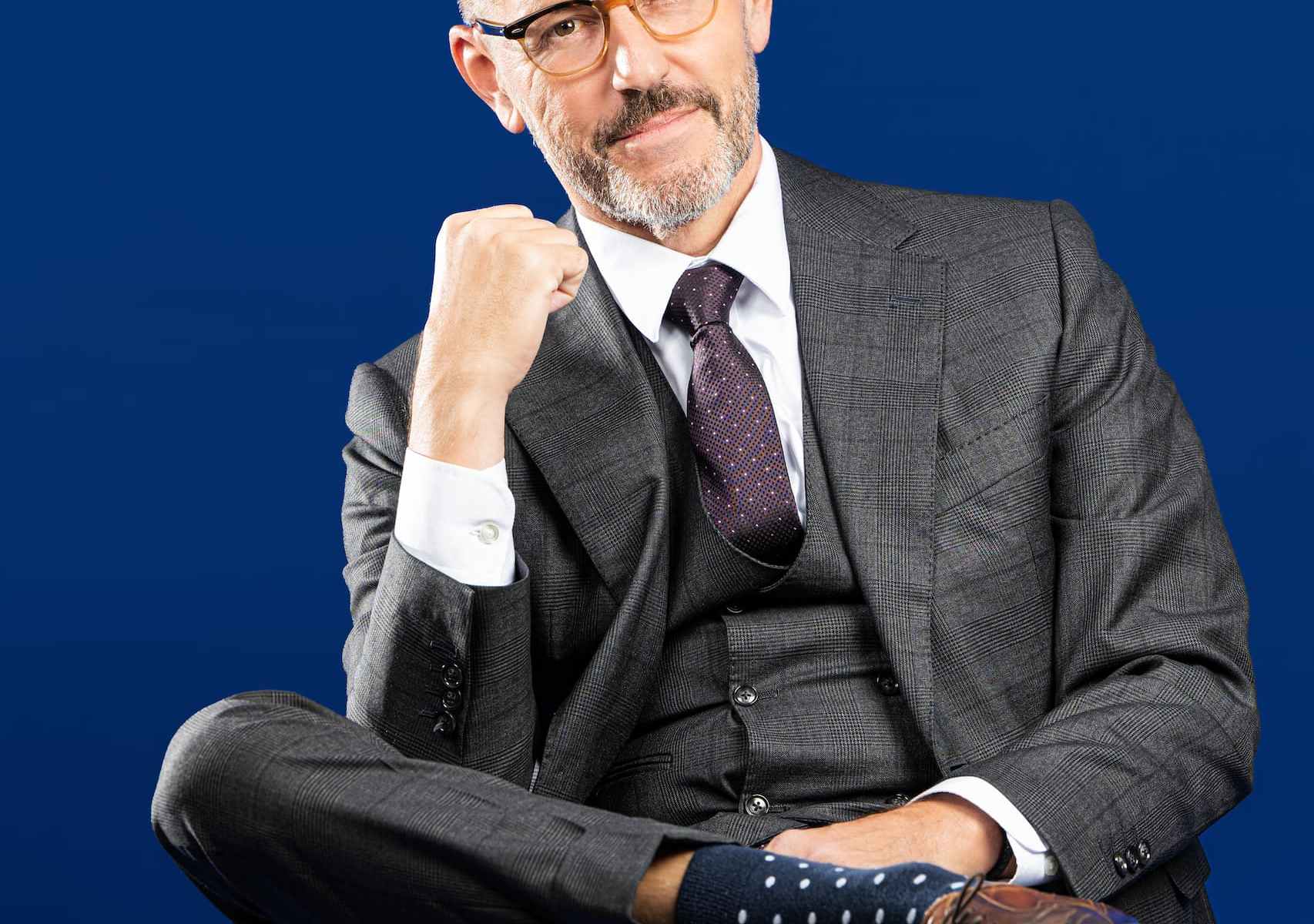
jozef opdeweegh in sitting in a black suit pumping his first

Overview: During a conversation with Jos Opdeweegh, a distinguished CEO based in Miami, the concept of Servant Leadership came to the forefront as a paradigm-shifting approach to organizational management. Opdeweegh provided illuminating insights into the limitations inherent in the conventional top-down leadership model, where decision-making authority is confined to a select cadre of executives, often resulting in the marginalization of talented individuals and their perspectives.

Shortcomings of the Conventional Leadership Paradigm

The deficiencies of the traditional leadership framework were glaringly evident, as it accentuated autocratic leadership tendencies and stifled the culture of creativity and open exchange of ideas within the organizational structure. Opdeweegh emphasized that instead of fostering a conducive environment for nurturing high-potential individuals, the traditional approach frequently perpetuated a culture of mediocrity, bolstered by inflexible performance assessment frameworks that inadvertently alienated exceptional talents.

Deconstructing Inefficient Decision-Making within Traditional Management

The contrast between the customary model and the ethos of Servant Leadership gained heightened clarity when examining decision-making processes. While the former relied on a limited echelon of leaders to shape pivotal determinations, Servant Leadership champions a more dynamic, customer-centric decision-making philosophy. Opdeweegh underscored the significance of entrusting decision-making authority to those in proximity to challenges and opportunities, given their comprehensive understanding of the intricacies and their expertise in the subject matter.

Unveiling the Core Tenets of Servant Leadership

In the course of our dialogue, Opdeweegh unveiled the foundational principles that underpin Servant Leadership: an unwavering commitment to fostering the growth and success of individuals within the organization, with a paramount focus on customers, followed closely by colleagues. This approach nurtures a sense of collective responsibility, wherein each member of the organization is viewed as an ambassador, collectively contributing to the shared objective of achieving success.

Embracing Fallibility and Cultivating Empowerment

One of the salient points of discussion revolved around the importance of acknowledging mistakes and their intrinsic connection to empowerment. Opdeweegh stressed that while making errors is inevitable, they hold value when acknowledged and leveraged as learning opportunities. The Servant Leadership framework advocates for a culture of continuous improvement and accountability, empowering individuals to take ownership of their actions and choices.

Concluding Reflections: Embracing the Philosophy of Servant Leadership

The discourse with Jos Opdeweegh yielded profound insights into the merits of adopting Servant Leadership as an all-encompassing, customer-centric, and adaptable approach to steering organizational trajectories. By challenging the established norms of leadership, enterprises have the potential to cultivate an environment that not only retains exceptional talents but also empowers individuals to flourish and make substantial contributions. Servant Leadership, characterized by its emphasis on collaboration, inclusivity, and the transformative power of learning from mistakes, stands poised to shape a more promising future for businesses and their workforce alike.

Models of Creativity: Analysis or Creativity-Fellows or Foes?

Originally Published in Fair Value

President Ronald Reagan, Speaking after talks with Soviet leader Mikhail Gorbachev at the Reykjavik summit in 1986, infamously said that what was most needed between the superpowers was “Trust… [adding, after a dramatic pause]… but verify!” 

Trust but Verify

The apparent contradiction made headlines around the world, helping to foster an approach that led to the Strategic Arms Reduction Treaty and the removal of around 80 percent of the nuclear warheads in existence.This phrase is actually not Reagan’s at all, but an old Russian proverb that serves to illustrate that a counterintuitive tension is often the most effective way to break down those barriers that impede step-change progress. Its wisdom is now commonplace, aided by the growth of technology that gives confidence to more attitudes: “trust trading,” for example, is a standard practice among progressive retail partners; customs checks are made on random samples; we trust our people but verify their output…

How Trust but Verify Applies to Business

All of this is intended as a prompt to reflect on how we might apply similar thinking to our organizations. What, as business leaders, can we do to foster the relationships and environment that supports the creative progress we need? And how do we balance the need for innovation with the equally necessary reassurance that our actions are founded on more than a leap of faith?Fresh thinking is essential to progress. Without it, we stagnate, our horizons narrow, and our competitors overtake us. At a macro level, the impetus for change is essential for human flourishing-it’s no coincidence that when innovation dries up or is curtailed by dogma, we talk of “Dark Ages” or “closed societies.” History is littered with examples of the damage this causes, just as it also confirms the benefits of freethinking and the open society.We all know this, and yet the reality is that when it comes to our own circumstances, creative leaps can be scary and uncertain, evoking what the historian Robert Hughes brilliantly described as “the shock of the new.” His interest lay in the arts, but the same sequence of “disruption, resistance, and progress” is seen in the scientific and industrial revolutions that preceded our modern era. And today, the pattern continues, most obviously in the digital sphere, which has supercharged the speed and reach-but also the risks-of creative innovation.It is a mistake, however, to think of creativity purely in terms of inspirational genius. As James Dyson, the billionaire UK engineer and inventor, has pointed out-practical progress is seldom made in the manner of Archimedes in his bath or Isaac Newton under the apple tree. Rather, it’s an iterative journey that sharpens our notions and intuition through a process of trial, error, and adjustment. Dyson has filed over 4,000 patent applications, and yet he claims none of his ideas were truly unique. What? Made the difference is his commitment to the hard hours of testing and adjustment that irons out the flaws and solves problems in a piecemeal way.Dyson also argues that innovation flourishes most in an atmosphere of creative tension, where ideas are robustly and competitively challenged, often in partnerships or teams, in pursuit of a common goal. We see this pattern time and again in art and science: Picasso andBraque, Darwin and Wallace, Lennon and McCartney… The relevance for business leaders is that innovation works best when it’s integral to, and not isolated from, the day-to-day realities of the organization. Indeed, research has shown that transformation and development teams work most effectively and come up with the most productive ideas-when subject to the same rigorous critique and analysis as our everyday processes.

Ground Break Creativity Is Rare

Ground-breaking creativity is also a rare event-were it is not; then change would simply overwhelm us. The reality is that most great ideas take the form of an inspirational leap which is then refined through marginal gains that make the bigger difference. As an apt illustration, when Dick Fosbury revolutionized the high jump at the 1968 Mexico Olympics, he won by a mere 2cm, clearing 2.24m for gold-today, after universal adoption of and, critically, refinement to his groundbreaking technique-the world record stands at 2.45m.

Creativity Takes Work

These sorts of gains come not from pondering on the stars but from analyzing what works best, finding ways to improve on the idea, and being open to our failures. The writer Matthew Syed explores this idea in his deeply persuasive and accessible book, Black Box Thinking. Syed cites the aviation industry as the ultimate example of progressively learning from both failure and innovation-its embrace of objective analysis taking air travel from what was once the riskiest to what is currently the safest form of mass transportation.

Analysis Helps Creativity

The analysis is, therefore, the bedfellow, and not the bugaboo, of practical creativity. For by measuring and learning, not only do we sort the wheat from the chaff, we also help the good become great or, more often, just that little bit better. Malcolm Gladwell has a wonderful podcast that explores this process through the evolution of Leonard Cohen’s song, “Hallelujah.” The piece took years to gestate, slowly improving its form and lyrics to become one of the most recognized classics in modern songwriting.

Little Bit Better

The operative phrase in the paragraph above is a “little bit better.” That’s something different from reinvention, and yet ironically, it requires a similar mindset. Though on reflection, maybe it’s not ironic at all for now, I think about it, the most analytic people I’ve worked with are among the best innovators -and almost all creatives I know are deeply analytic in their approach.Which brings me back to my opening example. For Ronald Reagan to make the breakthrough with Russia, he needed a creative leap of the type scientist Edward de Bono described when he wrote about shifting perspectives by throwing off old patterns. But to make it work for the gains to truly stick-he needed something more, something that the great American poet, Henry Wadsworth Longfellow, might have taught him- “The heights by great men reached and kept were not attained by sudden flight, but they, while their companions slept, were toiling upward in the night.”

Relative values – and the Barbenheimer phenomenon.

You’d have to have been in a cultural wilderness this last month not to be aware that the two most talked about films of this summer are almost diametrically opposed in their style and substance. That said, the simultaneous release of Barbie and Oppenheimer is arguably a marketing masterstroke, generating thousands of column inches and an equivalent commentary on social media. Interestingly, the critical consensus is that both movies have their merits, with an appreciation of their differing qualities that are encapsulated by the use of the term ‘Barbenheimer’ to describe seeing them both side by side.

This mutual appreciation of two very different offerings has neatly coincided with my own exploration – indeed, growing fascination – with how we create the best conditions for the growth of happiness and well-being. Or, to be more precise, my awareness that despite the criticality of these goals to the quality of our lives, there are no clear and obvious means to measure and calibrate them other than through internal experience. 

Let me try to explain.

For most of my adult life, and certainly my business career, I’ve held in tension two convictions that have guided my actions and my decisions. Indeed, the strain between them and how we might embrace it is the underlying theme of my book of essays, Fair Value – reflections on good business.

Numbers Don’t Lie

The first assertion is that ‘numbers don’t lie.’ This refers to the need for financial acumen, the ability to correlate and interpret data, and an acknowledgment that we have a duty as leaders to respond to reality as it is rather than how we might wish it to be.  

Values are Critical to Performance

The second is that values are critical to performance.’ Indeed, I’d go further and say that in business terms, values and purpose are today more important than the pursuit of pure profit or return on capital or whatever other fiscal measure we might choose to highlight.  

Does either help with Internal Feelings?

Neither of these convictions, however, helps us to accurately measure those goals which arguably matter most of all, such as happiness and contentment, or their counterparts, sorrow, and anxiety.  Almost by definition, these higher-level concepts are abstractions, resisting the specific quantification that a trained statistician so craves. 
Take, for example, my love of PG Woodhouse, an author whose wit and humor have given me (and millions of others) immense pleasure, without his writing ever being highbrow or having claim to the literary genius of, say, Shakespeare or Steinbeck — both of whom I enjoy too.  Is my pleasure from any one of these authors better or more important than the others, and if so, how do we measure that difference?

We All have Preferences 

All of us will have experienced something similar to the example above, for part of being human is the ability to hold preferences, be they for music, architecture, landscapes, foods, or humor…   Just as we have different desires for less tangible satisfactions such as security, contentment, and personal growth.  We know as well that over time, and in changing circumstances, these wishes will evolve and vary, which explains why one day we might choose to watch Oppenheimer and the next take as much pleasure (albeit in different ways) from Barbie.

My key interest here is less philosophic than it is practical. 

Moral Relativism vs Absolutism

In the 2,500 years since Plato, our best minds haven’t found a watertight alternative to what’s known as the problem of relativism. This perhaps explains why the questions I’ve been wrestling with these last few months don’t neatly fit into one article. But despite our lack of objective measurements, the reality is that most of us don’t truly live our lives in a way that assumes all pleasures to be equal, just as we don’t think there’s no difference in mortality between acts of cruelty and kindness.

Business and Moral Relativism

At its core, what concerns me is the real-world problem of how we best manage our businesses and organizations (as well as our family lives and careers) to align with what we might summarize as our ‘happiness and well-being.’  Or, more specifically, how might better promote the variety of perspectives and preferences that make us who we are and yet are so problematic to rank and measure in any objective way? 

And finally, there is the question that interests me the most.

As businesses and organizations, can we shift our emphasis towards a greater personal fulfillment and yet stay true to the twin convictions of ‘facing reality’ and ‘values inspired performance, which remain key to tangible success?  In other words, can we find a Barbenheimer solution that embraces a greater range of aspirations, existing side by side and making contributions that may not be equal, but are collectively beneficial?  
Cracking that conundrum, it seems to me, would be a real breakthrough for the good.

Giving to Ourselves and Others

Giving to Ourselves and to Others

Originally Published in Fair Value

The face looking at me from the newspaper is perhaps six years old. It’s a young boy in a makeshift tent, mud on his cheeks, hands clasped as if in prayer. The caption tells me he’s lost his home and that winter may take his life. I think it’s his eyes that move me most, speaking of a horror that no child should bear. My palms feel sticky as I pick up the phone, text HELP, and make a donation to the Syrian refugee appeal.

Fundraisers Happen Frequently

Fundraisers like these have become part of the fabric of our lives—they are in our magazines, on TV, and even on posters on the subway. So commonplace are these images that we learn to filter them out. In the newspaper I was reading, there were similar appeals for cancer research, wildlife conservation, homelessness, and victims of domestic abuse. At times, it seems there’s no end to the call on our goodwill. And that should not be surprising, for the urge to alleviate suffering is surely part of our humanity. Indeed, to have no sympathy for the pain of others is a mark of a psychopath. And yet we cannot credibly respond to every cry for help. In the United States, there are estimated to be 1.5 million registered nonprofit organizations, and in the UK, around a third of that number, with similar proliferation of social ventures across the developed world.

Nonprofit organizations as the Third Sector

This “third sector,” as it’s sometimes called, has become a significant part of our social infrastructure and, in many ways, it’s as competitive for our attention as the mainstream economy. We choose our causes, and from the natural disorder of what is effectively a market for our hearts, there emerges a growing wealth of charity in the broadest and most generous sense of that term. Or so the theory goes. The notion of charity as the desire to eliminate suffering is sometimes contrasted with a broader vision of philanthropy and the quest to find lasting solutions for the root causes of our problems. We tend to think of philanthropists as a rich few, often historical figures with a social conscience. In liberal democracies, much of their role is now given over to the state, with nonprofits filling the gaps and addressing more immediate and particular needs.

Government vs. Nonprofit: Charity Source

To my mind, the distinction is somewhat academic. All of us are aware that the problems in Syria or Somalia-or even our neighborhood-are the result of forces that ought to be fixed. But we also know that hungry bellies need feeding, and traumatized children will not survive winter in a tent. Those caught in the crosswinds of circumstance are deserving of both our immediate attention and our efforts to make a greater and longer-lasting change. And, mostly, the two approaches go hand in hand. Very few larger charities are focused only on the here and now, and yet, understandably, they will seek to leverage our more visceral responses to raise funds and build awareness-just as they will lobby the rich and famous, be they individuals, governments, or corporations, for larger donations that offer the promise (and reflected aura) of a legacy difference. But for many of us, all of this can seem somewhat removed, which is surely why so many smaller organizations still thrive in the face of what’s become a quasi-corporate competition for our sympathies. A remark often misattributed to Winston Churchill is, “We make a living by what we get, but make a life by what we give.”

Donations and Volunteering are Different 

It nonetheless contains the truth which lies behind our desire not only to donate cash, which-good though it is-can feel like conscience appeasement, but to volunteer and campaign for causes, which-although they may seem peripheral to others-are closest to our hearts. I recall a colleague complaining to me, not unkindly but in frustration, about the fundraisers at his local school. They were so inefficient, he said; hours spent baking cakes and running raffles, when frankly if everyone who cared had simply donated twenty dollars, they’d have raised twice as much in half the time. He was probably right, but of course, he missed the point of the exercise. We get our children involved in community work as much for the lessons it teaches them as the difference they can tangibly make.

Volunteering Helps a Community

Of course, the definition of community is wider now than ever. For some, it remains rooted in their neighborhood, their church, or school. For others, that sense of belonging might come from their workplace, their hobbies, or their ethnicity. This is a good thing, for the diversity of interests leads ultimately to richer lives for us all and, I would argue, a voluntary sector that better reflects our needs and concerns than any interventionist design could hope to do. This is why, wearing my corporate hat for a moment, we should resist calls for overregulation of the nonprofit sector.Instead, we should encourage involvement and giving of different sorts-awarding tax breaks and stipends to those who volunteer, for example—and promoting new models of contribution that draw on our collective efforts as well as our cash. Throughout my career, I’ve had the privilege to work with many gifted individuals and have seen the progress that their flair makes possible. It’s common for the leaders of many different faiths to ask their followers to gift a percentage of their income but consider the impact if all of us offered a percentage of our talents. For some, that might mean baking cakes-and it’s good that they do—but for an academic say, it could be directing a percentage of their research at social issues, or for executives like myself, advising on strategies and governance.

Volunteering Builds Community 

In the US and the UK, nonprofits are typically seen as a substitute for state funding, but there are other approaches that we can learn from. I’ve already mentioned the roles of the churches and faiths, which are prominent in many cultures. Across much of mainland Europe, there is often a more social-corporate model, with close cooperation and even contracting between the state and charities. In Scandinavia and the Netherlands, where high taxes and high-quality services are the norm, the emphasis is on volunteering and participation.

Modern Philanthropy

The pool of our talent is limitless, and it is here, I believe, where the potential for modern philanthropy lies. Lasting social solutions are seldom designed from above; rather, they evolve through an iterative process of progress and refinement underpinned by care for the outcome. This asks more of us than the adverts and appeals that surround us and requires leaders to step forward and encourage others to do the same. But here’s the thing: it pays us back in spades. Short of utopia, there will always be a role for larger organizations, and thank goodness they are there. But to have a wider, more caring society, we need to bridge the gap between ourselves and those in need with something more tangible than simply texting HELP.

The building of Cathedrals: What it can teach us

There will be precious few children in Europe who have not visited a cathedral by the age of ten. From Notre Dame to Naples, there are over 600 across the continent, tangible reminders of national histories, the indiscriminate power of the church, and the ability of architecture to lift our spirits.


As a young boy, I was awestruck by the efforts that must have gone into constructing these monuments.  At a time when most people couldn’t read, when harvest yields meant life or death when medicine was little more than superstition… here were our forefathers, building these intricate structures with the most basic of tools.  How did they do it? How did they know it would all line up and not fall down? 

Cathedrals began my fascination with mathematics

Medieval masons didn’t use abstract equations, nor did they work to the detailed plans we would expect today. What they did have, though, was a deep understanding of practical geometry.  Using simple tools such as set squares, dividers, and plumb lines, they could calculate the forces involved in complex features like vaulted roofs; column supports, and flying buttresses. Indeed, so powerful were the ratios they discovered that even God was sometimes depicted as a geometer in Christian iconography. 

Decades on from my childhood visits, I remain astonished at the skills of these craftsmen and can’t help but think that their down-to-earth application of mathematics has something to teach us today. It is frankly a shameful disrespect to their legacy that despite centuries of progress, we struggle to embed basic numeracy even in college graduates. Here in the US only one-third of the population rates as having intermediate math skills, and fewer than 10% are classed as numerically proficient. 

Mathematics Matters

And this observation matters. Not so much for the construction of buildings or the development of integrated systems – we don’t need everyone to have those skills. But rather, for a shared understanding of issues that affect us all: for sound finances and planning, for decisions that determine the future of enterprises; for policies that lay the foundations of our public services and healthcare; for the fight against pseudo-science and the deplorable army of social media charlatans; for the understanding of basic concepts of statistics.

Data can be Misrepresented

Today, there are whole industries that thrive on a deliberately misleading presentation of data, promoting all manner of quackery, from transformative beauty products to miracle diets and sure-fire financial investments. They are aided by negligent or insufficiently critical media more interested in clickbait headlines than robust analysis. The standard of financial journalism, for example, is almost criminally poor. But all of this pales into insignificance compared to the politicians who would whip up hate and mindless populism on the back of spurious numbers presented as facts.


Regrettably, the challenge of improving numeracy is not confined to the socially disadvantaged. Over my career, I’ve worked with many brilliant and inspiring people. But I’ve also been in Board rooms with board members and colleagues who lacked the basic understanding of concepts that are necessary to interpret, correlate and extrapolate data. 
Granted, my academic training was in statistics and operations research, so no doubt I may be more alert and attentive to these shortcomings. And I should also be clear that good business is about more than mere numbers. Nonetheless, surely, we can, and we, in fact, must do a lot better.

Data and Mathematics are Fundamental to Understanding Problems

During the recent pandemic, we all became armchair epidemiologists, but how many of us truly understood what the data was actually telling us? I am not sure I did in every regard. Was it any surprise that manipulators and charlatans then exploited the gaps to influence opinions? Much the same is true of the climate change debate, of anti-vaccination crusaders, of immigration, taxation, and welfare, of government spending, and we can go on and on. It is an irony that as we move rapidly to a world that’s likely to be shaped by Artificial Intelligence, we need more than ever to have a greater understanding of the underlying basics. It is these that help to give us the analytical (and indeed often moral) compass we need when confronted with otherwise overwhelming information. 


On my recent visit to the UK, Prime Minister Rishi Sunak launched a campaign to improve mathematics teaching. Then followed an article in the London Times by one of its leading columnists who bravely admitted to having such poor numeracy skills that she struggled to calculate her change when shopping.  Her case is not atypical, nor is her ability to improve (which she did) through better instruction and practical application. I hope the UK campaign succeeds and that, more broadly, governments across the democratic nations are able to address the regression of numerical literacy that’s ultimately of our own making and a big part of the reason for the populist demagoguery and the resulting democratic deficit. 

Returning to the cathedrals I began with, it’s often said that those who built them were laboring for future generations. I wonder, though, what those master craftsmen would make of our world today.  I’m sure they’d be as in awe of us as we are of them, recognizing that so much has changed for the better. But I’m certain too that they would be astonished by our casual loss of what was once a bedrock of everyday knowledge. And that if they set their dividers and squares to many of our analytical foundations, they would find them in need of some urgent underpinning. 

The Fair Value Equation

Originally Published in Fair Value

Not Far From my London house is the Charles Dickens Museum, a three-story Georgian terrace where the author chronicled the life and poverty of Victorian England. From here, it’s a short walk to many of his novels’ famous settings: Smithfield Market, the Old Curiosity Shop, and the now-repurposed workhouses that were once a commonplace feature of the city. 

We have come a long way in improving the social conditions that inspired novels like Oliver Twist. Indeed, it’s said that were it ever possible to return to those times, a modern-day visitor would be traumatized not only by the sights but by what they would smell! The sanitary conditions of London were so poor that for several summers in the 1850s, it was described as the Great Stink

Imagine for a moment what that must have been like-not in Dickens’s comfortable home but in the filth and hopelessness of the slums which surrounded it. Imagine, too, the bass note of fear that accompanied a life without healthcare, decent education, or fair access to the law where the refuge of last resort was the workhouse, a fate so dreadful that only the desperate ever entered. 

It’s sobering to think that these conditions existed at a time of relative peace and prosperity in what was then the most powerful nation on earth. 

Fairness and Value

That they were tolerated was not so much for want of resources but as a lack of empathy with those who suffered the consequences. Questions of fairness and value were regarded as matters of charity or evangelism rather than deriving from our fundamental rights or the duties of a compassionate state. The dominant social ethic of the time was framed by the idea of the deserving and underserving poor, a belief (from those with power and privilege) that we flourish or fail through our efforts and industry alone. 

Such views are now rightly seen as naive, but we are far from abandoning them. Indeed, since the dismantling of the USSR and the reinvention of China, the Western capitalist model of meritocratic enterprise has relegated more egalitarian alternatives to the fringes. And in many ways, that’s a good thing, for it’s evidentially true that industry and incentive reap both individual and collective rewards. 

Starting Points Matter

The difference today is that we understand the race of opportunity is far from fair-that; while our endeavors make a difference, our starting point has a significant bearing on the progress we are likely to make. This is why we have free and universal education, why we outlaw discrimination, why children are protected from poverty. Modern-day meritocracy recognizes that in a world where rewards are unequally spread, the competition for them should be as equitable as possible—at least, that’s the theory! 

In practice, we all know that inequality, and the burdens that come with it, is still rife. We know, too, that while there is no merit in being born into money, wealth and success follow hand-in-hand, just as surely as social mobility is the devil’s only job for those without privilege. The pursuit of what the philosopher John Rawles called “true equality of opportunity” remains a work in progress, albeit most developed nations have a positive trajectory. 

In sharing these thoughts, I’m deeply conscious that I have fared especially well in the lottery of life’s chances. I like to think that ambition and ability have played their part, but it’s impossible to deny the blessings I’ve had. Psychologists tell us that a significant determiner of our prospects can be something as simple as being read bedtime stories as a child—I came from a house full of books and a family that encouraged me to study; that alone is priceless. I also benefited from an enlightened system of social welfare that provided me with education, health care, and, ultimately, a choice of roads to travel that are a world away from the dead-ends of nineteenth-century London.

Collective Values Matter 

Today, I spend much of my time commuting between the US and Europe. Both are wonderful societies in their way-and we should largely rejoice in what they’ve achieved. But if there’s a single difference between my experience of people’s lives in these two economic powerhouses, it’s the prevalence of residual anxiety that is rooted in inadequate social provision for large numbers in American communities. The most common question my European friends ask me—invariably with a sense of incredulity—is why the US, the richest and most powerful nation on earth, is so reluctant to provide universal, free-to-access healthcare. 

Levels of Compassion Matter

It’s not my purpose or my place to delve too deeply into politics. The reference to health care is more a reporting of the transatlantic attitudinal differences than any polemic on my part. Rather, I’m reflecting on how our collective values have impacts that go so much deeper than our fiscal systems and the scope of the services our governments provide. I call this the fair value equation, measuring the worth of our society in terms not only of what it produces but also of the compassion it shows and the well-being that results. 

The business has much to teach us here. The reflection above might imply there is a conflict between the two goals, but in practice, we know the best companies have the most progressive policies, treat their people with care, and show concern for the environment . . . It’s no coincidence that there are few organizations of this size that operate today without a clear statement of values. 

And furthermore, it’s no surprise that those organizations which found their policies on “true equality of opportunity” have the highest levels of engagement. This isn’t because they pay higher wages, for the relationship between remuneration and employee commitment is weak. True engagement and the discretionary effort which follows comes from a combination of involvement, progression, fair and equitable treatment, and, most importantly of all, a commonly held belief that everyone is a fully valued member of the organization, regardless of their seniority. 

Societies should support their Citizenry

Returning to our governments, if, as societies, we provide less than is necessary for citizens to feel they have a fair stake in their communities, then we should expect engagement of a different sort. History shows us that the biggest threats to our democracies and freedom have come from those who feel excluded-in the despair which follows, it’s all too easy to be persuaded by simplistic solutions that play to our survival instincts. The roots of fascism, nationalism, and what today we call populism lie not in a rational assessment of our best interests but in the sense of hopelessness and the fear which comes with it. 

In Northern and Western Europe, the socio-political model is based (significantly more so than the US) on the provision of universal public services, underpinned by a wide-reaching safety net that, if not exactly eliminating, at least dulls that bass note of anxiety I spoke of earlier. Counter to nineteenth-century thinking; the result is not a loss of incentive or productivity from those at the bottom of the social ladder. Indeed, the countries with the most comprehensive welfare systems have the highest levels of intergenerational social mobility.

We’re in it Together

Meanwhile, the US, far from being the land of opportunity, has one of the poorest records in this regard any enlightened leadership doesn’t mean there are no hierarchies or that remuneration and reward should be equally spread. But it does mean we must recognize the pursuit of success is a joint endeavor and that we flourish most when we nurture the prospects of all. If-on the contrary-we, exclude sections of our workforce, deny them fair, or provide only insecure contracts-then we lose out opportunities on their full potential. In practice, then, the two sides of the fair value equation operate not in conflict but in concert. If our care lacks depth, then commitment will be shallow-but so too the opposite and therein lies our opportunity. 

Pursuing this alternative course can require a leap of faith—not least because there will always be some who seek to game the system. But I’d argue this is a small price to pay, for the alternative is not so much a race to the bottom as a burden that weighs us down as individuals and societies.

To lighten the load, we need surely to share it not as a penance but in the knowledge that unless we do so, gravity will win, and all of us are diminished as a consequence. 

We might be mindful too of the fates of Mr. and Mrs. Bumble, the workhouse-keepers in Oliver Twist. Their hearts were said to be impervious to tears; ‘waterproof’ is how Dickens’ described them. But as the story, and their pursuit of self-interest, unfolds, they “were gradually reduced to great indigence and misery, and finally became paupers in that very same workhouse in which they had once lorded it over others.”