Relative values – and the Barbenheimer phenomenon.

You’d have to have been in a cultural wilderness this last month not to be aware that the two most talked about films of this summer are almost diametrically opposed in their style and substance. That said, the simultaneous release of Barbie and Oppenheimer is arguably a marketing masterstroke, generating thousands of column inches and an equivalent commentary on social media. Interestingly, the critical consensus is that both movies have their merits, with an appreciation of their differing qualities that are encapsulated by the use of the term ‘Barbenheimer’ to describe seeing them both side by side.

This mutual appreciation of two very different offerings has neatly coincided with my own exploration – indeed, growing fascination – with how we create the best conditions for the growth of happiness and well-being. Or, to be more precise, my awareness that despite the criticality of these goals to the quality of our lives, there are no clear and obvious means to measure and calibrate them other than through internal experience. 

Let me try to explain.

For most of my adult life, and certainly my business career, I’ve held in tension two convictions that have guided my actions and my decisions. Indeed, the strain between them and how we might embrace it is the underlying theme of my book of essays, Fair Value – reflections on good business.

Numbers Don’t Lie

The first assertion is that ‘numbers don’t lie.’ This refers to the need for financial acumen, the ability to correlate and interpret data, and an acknowledgment that we have a duty as leaders to respond to reality as it is rather than how we might wish it to be.  

Values are Critical to Performance

The second is that values are critical to performance.’ Indeed, I’d go further and say that in business terms, values and purpose are today more important than the pursuit of pure profit or return on capital or whatever other fiscal measure we might choose to highlight.  

Does either help with Internal Feelings?

Neither of these convictions, however, helps us to accurately measure those goals which arguably matter most of all, such as happiness and contentment, or their counterparts, sorrow, and anxiety.  Almost by definition, these higher-level concepts are abstractions, resisting the specific quantification that a trained statistician so craves. 
Take, for example, my love of PG Woodhouse, an author whose wit and humor have given me (and millions of others) immense pleasure, without his writing ever being highbrow or having claim to the literary genius of, say, Shakespeare or Steinbeck — both of whom I enjoy too.  Is my pleasure from any one of these authors better or more important than the others, and if so, how do we measure that difference?

We All have Preferences 

All of us will have experienced something similar to the example above, for part of being human is the ability to hold preferences, be they for music, architecture, landscapes, foods, or humor…   Just as we have different desires for less tangible satisfactions such as security, contentment, and personal growth.  We know as well that over time, and in changing circumstances, these wishes will evolve and vary, which explains why one day we might choose to watch Oppenheimer and the next take as much pleasure (albeit in different ways) from Barbie.

My key interest here is less philosophic than it is practical. 

Moral Relativism vs Absolutism

In the 2,500 years since Plato, our best minds haven’t found a watertight alternative to what’s known as the problem of relativism. This perhaps explains why the questions I’ve been wrestling with these last few months don’t neatly fit into one article. But despite our lack of objective measurements, the reality is that most of us don’t truly live our lives in a way that assumes all pleasures to be equal, just as we don’t think there’s no difference in mortality between acts of cruelty and kindness.

Business and Moral Relativism

At its core, what concerns me is the real-world problem of how we best manage our businesses and organizations (as well as our family lives and careers) to align with what we might summarize as our ‘happiness and well-being.’  Or, more specifically, how might better promote the variety of perspectives and preferences that make us who we are and yet are so problematic to rank and measure in any objective way? 

And finally, there is the question that interests me the most.

As businesses and organizations, can we shift our emphasis towards a greater personal fulfillment and yet stay true to the twin convictions of ‘facing reality’ and ‘values inspired performance, which remain key to tangible success?  In other words, can we find a Barbenheimer solution that embraces a greater range of aspirations, existing side by side and making contributions that may not be equal, but are collectively beneficial?  
Cracking that conundrum, it seems to me, would be a real breakthrough for the good.

Giving to Ourselves and Others

Giving to Ourselves and to Others

Originally Published in Fair Value

The face looking at me from the newspaper is perhaps six years old. It’s a young boy in a makeshift tent, mud on his cheeks, hands clasped as if in prayer. The caption tells me he’s lost his home and that winter may take his life. I think it’s his eyes that move me most, speaking of a horror that no child should bear. My palms feel sticky as I pick up the phone, text HELP, and make a donation to the Syrian refugee appeal.

Fundraisers Happen Frequently

Fundraisers like these have become part of the fabric of our lives—they are in our magazines, on TV, and even on posters on the subway. So commonplace are these images that we learn to filter them out. In the newspaper I was reading, there were similar appeals for cancer research, wildlife conservation, homelessness, and victims of domestic abuse. At times, it seems there’s no end to the call on our goodwill. And that should not be surprising, for the urge to alleviate suffering is surely part of our humanity. Indeed, to have no sympathy for the pain of others is a mark of a psychopath. And yet we cannot credibly respond to every cry for help. In the United States, there are estimated to be 1.5 million registered nonprofit organizations, and in the UK, around a third of that number, with similar proliferation of social ventures across the developed world.

Nonprofit organizations as the Third Sector

This “third sector,” as it’s sometimes called, has become a significant part of our social infrastructure and, in many ways, it’s as competitive for our attention as the mainstream economy. We choose our causes, and from the natural disorder of what is effectively a market for our hearts, there emerges a growing wealth of charity in the broadest and most generous sense of that term. Or so the theory goes. The notion of charity as the desire to eliminate suffering is sometimes contrasted with a broader vision of philanthropy and the quest to find lasting solutions for the root causes of our problems. We tend to think of philanthropists as a rich few, often historical figures with a social conscience. In liberal democracies, much of their role is now given over to the state, with nonprofits filling the gaps and addressing more immediate and particular needs.

Government vs. Nonprofit: Charity Source

To my mind, the distinction is somewhat academic. All of us are aware that the problems in Syria or Somalia-or even our neighborhood-are the result of forces that ought to be fixed. But we also know that hungry bellies need feeding, and traumatized children will not survive winter in a tent. Those caught in the crosswinds of circumstance are deserving of both our immediate attention and our efforts to make a greater and longer-lasting change. And, mostly, the two approaches go hand in hand. Very few larger charities are focused only on the here and now, and yet, understandably, they will seek to leverage our more visceral responses to raise funds and build awareness-just as they will lobby the rich and famous, be they individuals, governments, or corporations, for larger donations that offer the promise (and reflected aura) of a legacy difference. But for many of us, all of this can seem somewhat removed, which is surely why so many smaller organizations still thrive in the face of what’s become a quasi-corporate competition for our sympathies. A remark often misattributed to Winston Churchill is, “We make a living by what we get, but make a life by what we give.”

Donations and Volunteering are Different 

It nonetheless contains the truth which lies behind our desire not only to donate cash, which-good though it is-can feel like conscience appeasement, but to volunteer and campaign for causes, which-although they may seem peripheral to others-are closest to our hearts. I recall a colleague complaining to me, not unkindly but in frustration, about the fundraisers at his local school. They were so inefficient, he said; hours spent baking cakes and running raffles, when frankly if everyone who cared had simply donated twenty dollars, they’d have raised twice as much in half the time. He was probably right, but of course, he missed the point of the exercise. We get our children involved in community work as much for the lessons it teaches them as the difference they can tangibly make.

Volunteering Helps a Community

Of course, the definition of community is wider now than ever. For some, it remains rooted in their neighborhood, their church, or school. For others, that sense of belonging might come from their workplace, their hobbies, or their ethnicity. This is a good thing, for the diversity of interests leads ultimately to richer lives for us all and, I would argue, a voluntary sector that better reflects our needs and concerns than any interventionist design could hope to do. This is why, wearing my corporate hat for a moment, we should resist calls for overregulation of the nonprofit sector.Instead, we should encourage involvement and giving of different sorts-awarding tax breaks and stipends to those who volunteer, for example—and promoting new models of contribution that draw on our collective efforts as well as our cash. Throughout my career, I’ve had the privilege to work with many gifted individuals and have seen the progress that their flair makes possible. It’s common for the leaders of many different faiths to ask their followers to gift a percentage of their income but consider the impact if all of us offered a percentage of our talents. For some, that might mean baking cakes-and it’s good that they do—but for an academic say, it could be directing a percentage of their research at social issues, or for executives like myself, advising on strategies and governance.

Volunteering Builds Community 

In the US and the UK, nonprofits are typically seen as a substitute for state funding, but there are other approaches that we can learn from. I’ve already mentioned the roles of the churches and faiths, which are prominent in many cultures. Across much of mainland Europe, there is often a more social-corporate model, with close cooperation and even contracting between the state and charities. In Scandinavia and the Netherlands, where high taxes and high-quality services are the norm, the emphasis is on volunteering and participation.

Modern Philanthropy

The pool of our talent is limitless, and it is here, I believe, where the potential for modern philanthropy lies. Lasting social solutions are seldom designed from above; rather, they evolve through an iterative process of progress and refinement underpinned by care for the outcome. This asks more of us than the adverts and appeals that surround us and requires leaders to step forward and encourage others to do the same. But here’s the thing: it pays us back in spades. Short of utopia, there will always be a role for larger organizations, and thank goodness they are there. But to have a wider, more caring society, we need to bridge the gap between ourselves and those in need with something more tangible than simply texting HELP.

Fear and the Price Tag of Trust

Originally Published in Fair Value

As a young boy growing up in Peer, it was natural I’d want to learn to ride a bike. For though Belgium is not awash with heroes, we had all heard of Eddy Merckx, widely regarded as the world’s greatest cyclist.

The problem, at least at first, was that I wasn’t very good. No sooner would I start pedaling than I’d panic and crash to the ground? After yet another painful tumble, my father once exclaimed, “The problem is, you’re so afraid of falling that you forget to push through.”

Fear and Stress are Human

Fear, of course, can be both physical and mental. In acutely stressful situations, we trigger hormones that have their evolutionary root in our ancestral environment. When faced with danger, our bodies tell us to either fight, flee, or freeze. The symptoms include heart palpitations, sweaty palms, and the need to pee! Psychologically, our attention is drawn to the immediate, our focus narrows, and we act according to our instincts rather than any deeper reasoning.

I sometimes wonder if there’s a political equivalent. In the US, as I write, the nation is in the midst of the Trump-Biden presidential campaigns. The anxiety is palpable and, in many ways, more so than any policy differences. Rustbelt America dreads the return of an out-of-touch elite; the graduates of Boston abhor what they read on Twitter; our banks are concerned about a move to the Left; our destitute remain fearful of the Right. It comes to something when even the postal system has been politicized for fear of fraud in what’s regarded as the home of freedom. 

Something similar is happening in the UK. The issue of Brexit has paralyzed British politics for the last five years and arguably longer. Business is disrupted, investment is delayed, and uncertainty and mistrust are endemic. Despite a referendum and a general election, there is no sign of a consensus that might unite the nation in a common endeavor. The schism between those who would fight and those who would flee is as divisive and draining as ever.

Balancing Interests is Fundamental for Business

Imagine if we were to run a business this way-if, there were no requirements to balance the interests of stakeholders but rather to meet only the needs of those who held the most sway. Such a model would tear our companies apart, destroying value for all through the pursuit of a blinkered agenda. If I have learned anything as an organizational leader, it’s that sustainable progress requires a broader and longer-range perspective than the hollow promises of trouble-shooters and partisans. 

This is not to say that decisive action is never required— procrastination can be as deadly as impetuousness. But it is that good business must do more and better than decide by the majority or follow homogenous agendas. That’s why diversity is so important. We thrive, and make better decisions, by considering a variety of perspectives; by ensuring we have not only social, ethnic, and gender balance in our teams but something of the same in our modes of thinking—we need creatives and disruptors just as much as we need hard-nosed operators and cautious finance directors.

The historian Niall Ferguson has spoken of the lack of empathy in contemporary political debate, as if putting ourselves in someone else’s shoes is to concede the unthinkable, to legitimize the other who threatens our sense of safety. Ferguson is an erudite academic, a Stanford fellow who must cringe at the gaucheness or superficiality of any other populist political agenda. And yet, perhaps more than a commentator, he has sought to understand and communicate its appeal, acknowledging that while populist leaders have a loose relationship to facts, they also call out truths that are deeply felt by many. His theme is not that these are noble politicians but that unless we allow ourselves to look beyond their rhetoric and acknowledge the concerns that underlie their appeal, we will not make progress together. We need to listen and try to understand the views and concerns of others than ourselves, even if we are convinced that they are “wrong.”

It’s Important to expect the Best of Our Leaders

To be this generous is difficult. My response to the political decisions I perceive as foolish or unjust ranges from anger to despair –and especially so when there is a disingenuity to those delivering the message. In a sense, it’s a cognitive equivalent of the fight or flight phenomenon. My values tell me there are lines we must not cross, and on these, I am firm. But I also know that politics is not an ethical exercise-that that weighs more heavily than what ought and that the pursuit of power has its own self-rationalizing dynamic. To expect better of our leaders is better held as a hope than an expectation. 

Hope, nonetheless, is a powerful counterforce to the problems of the present. It’s why all leaders trade on vision and why those in business must do likewise-though ideally, with more veracity and sincerity than their political counterparts. Vision-in the sense of laying out a positive future for our companies-is in many ways what modern leadership is most about. To succeed, we must bring others with us, keep our word, and win the trust of more than a slim majority.

The Price Tag of Trust is Fundamental

The cost of fear-or, put differently, the price tag of trust is intangibly vast. In football management, the term “lose the dressing room” means to have lost the confidence of your players. It invariably ends in tears. After the financial crash, our banks spent millions of dollars revisiting their values – a decade later they’re still trying to convince us. The police and other public bodies are under similar pressure- Black Lives Matter is but one example of injustices that are deeply felt by those who’ve lost faith. 

When our fears are most immediate-and most beyond our control-we, seek salvation in simplicity. That’s why in a crash, the demand for gilts and gold will rise-a “Rush to quality” is what it’s known as. We look to authority, too, whether that be through prayers or deference to hierarchies that compensate for our f of impotence. Salvation means, literally, to be saved from ruin-it strikes me the appeal of populist politics is something similar. 

In certain situations, this approach may be appropriate. When faced with a hurricane, most of us know it’s best to follow the advice of the experts. But to resolve more complex problems and overcome discord that is deeply rooted, we must look beyond simplistic panaceas. We must pool our knowledge and ideas and have the courage, as leaders, to give way to the wisdom of others. To overcome fear, we must find what unites us before addressing what divides us.

In his magnificent book, “Sapiens: A brief History of Humankind,” Yuval Noah Harari chronicles the progress of humanity. Eschewing the usual chronology of princes and kings, he examines how, as a species, we have made such remarkable progress-reflecting on what it is about our abilities and psychology that has taken us from a few hundred thousand to eight billion individuals. And at root, his answer lies in our ability to work flexibly together, using language and reasoning to keep faith with ideas that bind us in common causes-be those money, nation-states, laws-and, more recently, in historical terms, companies, and international institutions.

I take strength from his long-term perspective. Not only in the stoic maxim of “this too will pass” but in the knowledge that regressive periods, such as the one in which I believe we’re currently mired, are blips on the curve. There are more millennials in China than the entire population of the United States-no amount of retrenchment will resist that commercial imperative and the opportunities it brings. We are, on the whole, freer today than we have ever been; we are less likely to die from conflict, have longer life expectancy, and have better education. Many of our deepest fears are trivial compared to those our forefathers took in their stride. 

There are exceptions to this optimism-the climate crisis is perhaps the most obvious, and we shouldn’t live on the basis that “all will be well in the Twenty-second Century.” But as I learned as a boy, the surest way to fall from a bike is to focus only on the wheel in front of you. To make collective progress-be that in business, politics, or as people-we must have faith in our future, care for each other, and a trust that extends beyond tomorrow. 

My father was wrong when he said I wasn’t pushing through; the problem was that I wasn’t looking far enough ahead. 

The building of Cathedrals: What it can teach us

There will be precious few children in Europe who have not visited a cathedral by the age of ten. From Notre Dame to Naples, there are over 600 across the continent, tangible reminders of national histories, the indiscriminate power of the church, and the ability of architecture to lift our spirits.


As a young boy, I was awestruck by the efforts that must have gone into constructing these monuments.  At a time when most people couldn’t read, when harvest yields meant life or death when medicine was little more than superstition… here were our forefathers, building these intricate structures with the most basic of tools.  How did they do it? How did they know it would all line up and not fall down? 

Cathedrals began my fascination with mathematics

Medieval masons didn’t use abstract equations, nor did they work to the detailed plans we would expect today. What they did have, though, was a deep understanding of practical geometry.  Using simple tools such as set squares, dividers, and plumb lines, they could calculate the forces involved in complex features like vaulted roofs; column supports, and flying buttresses. Indeed, so powerful were the ratios they discovered that even God was sometimes depicted as a geometer in Christian iconography. 

Decades on from my childhood visits, I remain astonished at the skills of these craftsmen and can’t help but think that their down-to-earth application of mathematics has something to teach us today. It is frankly a shameful disrespect to their legacy that despite centuries of progress, we struggle to embed basic numeracy even in college graduates. Here in the US only one-third of the population rates as having intermediate math skills, and fewer than 10% are classed as numerically proficient. 

Mathematics Matters

And this observation matters. Not so much for the construction of buildings or the development of integrated systems – we don’t need everyone to have those skills. But rather, for a shared understanding of issues that affect us all: for sound finances and planning, for decisions that determine the future of enterprises; for policies that lay the foundations of our public services and healthcare; for the fight against pseudo-science and the deplorable army of social media charlatans; for the understanding of basic concepts of statistics.

Data can be Misrepresented

Today, there are whole industries that thrive on a deliberately misleading presentation of data, promoting all manner of quackery, from transformative beauty products to miracle diets and sure-fire financial investments. They are aided by negligent or insufficiently critical media more interested in clickbait headlines than robust analysis. The standard of financial journalism, for example, is almost criminally poor. But all of this pales into insignificance compared to the politicians who would whip up hate and mindless populism on the back of spurious numbers presented as facts.


Regrettably, the challenge of improving numeracy is not confined to the socially disadvantaged. Over my career, I’ve worked with many brilliant and inspiring people. But I’ve also been in Board rooms with board members and colleagues who lacked the basic understanding of concepts that are necessary to interpret, correlate and extrapolate data. 
Granted, my academic training was in statistics and operations research, so no doubt I may be more alert and attentive to these shortcomings. And I should also be clear that good business is about more than mere numbers. Nonetheless, surely, we can, and we, in fact, must do a lot better.

Data and Mathematics are Fundamental to Understanding Problems

During the recent pandemic, we all became armchair epidemiologists, but how many of us truly understood what the data was actually telling us? I am not sure I did in every regard. Was it any surprise that manipulators and charlatans then exploited the gaps to influence opinions? Much the same is true of the climate change debate, of anti-vaccination crusaders, of immigration, taxation, and welfare, of government spending, and we can go on and on. It is an irony that as we move rapidly to a world that’s likely to be shaped by Artificial Intelligence, we need more than ever to have a greater understanding of the underlying basics. It is these that help to give us the analytical (and indeed often moral) compass we need when confronted with otherwise overwhelming information. 


On my recent visit to the UK, Prime Minister Rishi Sunak launched a campaign to improve mathematics teaching. Then followed an article in the London Times by one of its leading columnists who bravely admitted to having such poor numeracy skills that she struggled to calculate her change when shopping.  Her case is not atypical, nor is her ability to improve (which she did) through better instruction and practical application. I hope the UK campaign succeeds and that, more broadly, governments across the democratic nations are able to address the regression of numerical literacy that’s ultimately of our own making and a big part of the reason for the populist demagoguery and the resulting democratic deficit. 

Returning to the cathedrals I began with, it’s often said that those who built them were laboring for future generations. I wonder, though, what those master craftsmen would make of our world today.  I’m sure they’d be as in awe of us as we are of them, recognizing that so much has changed for the better. But I’m certain too that they would be astonished by our casual loss of what was once a bedrock of everyday knowledge. And that if they set their dividers and squares to many of our analytical foundations, they would find them in need of some urgent underpinning. 

Blending Talent for the Future

Originally Published in Fair Value

Last Autumn, I gave an interview and later wrote about the importance of developing talent in organizations. My claim was that by creating opportunities for people to grow, we reap the reward of their unique and valuable contributions to our overall goal. That much, I said, is mainstream progressive thinking-so, much so that my substantive point was that sticking to the path isn’t always as easy as it seems. Certainly, I’d not expected the core view to be challenged.

Investing in Internal Talent Isn’t Enough

However, some weeks ago, a former colleague put it to me that investing in talent wasn’t enough; what’s more, she pointed out there were numerous examples where I’d personally hired senior leaders in a way that had potentially leapfrogged others in the organization. Surely, she suggested, there were times when building from within was too slow or too haphazard for the needs of a particular situation. And, of course, like all fair challenges, she was right—at least in part.

A commitment to growing and giving space to talent remains fundamental to the health of most companies. It’s especially appropriate in working towards long-term goals when the workforce is relatively stable and, importantly, when there’s sufficient scale and opportunity to allow for regular career progression. Absent some or all of these conditions and the strategy is clearly less productive. But even in the most vibrant and forward-thinking of organizations, there will still be occasions when an injection from outside can be both necessary and beneficial.

Bring In Outside Talent Is Needed

The impetus from fresh perspectives, particularly during periods of change, should not be underestimated. Nor too should the objectivity that external recruits can bring, helping to counterbalance the established cultures and processes which constrain all of our abilities to see things differently. And sometimes, particularly in markets that are changing rapidly, there’s a critical need for skills and insights that simply can’t be developed in-house. Recruitment for these purposes comes at a cost, but if done wisely I believe there’s no inherent conflict with a wider commitment to internal talent and succession plan.

Similarly, there are times when organizations require a short-term injection of skills that would be uneconomic or suboptimal to develop internally. Technology projects, for example, often need experts in coding and system architecture, just as transformation programs will benefit from change management specialists. Even those companies with a depth of internal skills to draw on are likely to have specialist partners to help with areas such as branding, legal matters, or senior recruitment.

Blending Internal and External Talent is Key

This blended approach to internal and external talent is the reality, if not the stated strategy, of most sizable companies. It’s sometimes referred to as the “build-buy-borrow” approach, and the skill is to get the balance right over time while meeting the needs of each situation. Too much emphasis on external recruitment, for example, will lead to demotivation and insufficient embedded knowledge; similarly, outsourcing works best when delivered through trusted partners who understand not only the immediate goals but also the culture and values of the organization, and often its history too.

Temporary, or Interim, Appointments Aren’t Usually Helpful

As an aside, one of the differences I’ve observed over recent years is the extent to which temporary appointments are significantly more common in the UK than in the US. Indeed, in the UK, it’s now not unusual to come across interim specialists whose career is founded on a mix of troubleshooting, project management, and “minding the shop” before the arrival of a permanent appointment. At their best, these specialists can be skilled at driving through the quick and sometimes difficult decisions that a crisis or void demands-but soon as we turn to look at the longer term, the attractions of interim appointments strike me as limited. As a former colleague once put it to me: interims are a very sharp tool to be used for precision and with appropriate care.

Returning to the original theme, while I’ve counter-argued that a blended approach to recruitment is compatible with a commitment to talent, there’s much truth in the suggestion that investment alone is not enough. Even a casual interest in the history of sports will show that the building of great teams is never just about money. Similarly, pouring cash into training and development programs without the appropriate culture and opportunity to support the aspirations this fosters will lead only to roadblocks and frustration; at worst, you’ll end up training colleagues on behalf of your competitors, which is where they’re likely to head.

Two weeks ago, the UK’s Sunday Times published the latest results of its annual “Best Companies to Work For” survey. The poll is a long-established benchmark of employee engagement as measured by colleague opinions to score highly; it’s not enough to have good policies on paper; they must truly resonate with employees across a range of workplace measures. As the “Best Companies” website neatly summarizes, at these leading companies, “… employees encounter inspirational leaders, charitable and environmental initiatives built into work life, a focus on staff wellbeing, fair financial rewards, skills- boosting training and career progression, excellent managers, and teammates who inspire both admiration and fun to lay boys That’s quite a list-and in scanning the results, it struck me that the majority of the businesses which ranked highly were necessarily not simply the feel they have sustained by necessarily the household names we might expect. This suggests it’s not simply the aura of a brand or even scale which makes colleagues feel they have the opportunity; rather, their satisfaction is primarily sustained by an ambition to succeed together, underpinned by values that respect them as individuals.

In-House Skills Isn’t Everything

So, what of the concerns raised by my former colleague? It’s certainly true that there have been occasions when I’ve hired external talent, and in most (though not all) cases, I’d do so again. And I agree that a sole focus on in-house skills, no matter how well-resourced, is unlikely to be sufficient. Indeed, given the uncertainties of commerce and the pace at which change occurs, I doubt any of the leading companies in the Sunday Times survey follow a single-track strategy. But for all that, a blended approach is a more accurate description of what most businesses will follow; without an underlying commitment to progress through people, their options are likely to be more limited and less sustainable.

In many ways, I was pleased to receive the challenge. I enjoyed the discussion, and in truth, our positions were inches apart. Importantly, it was offered in a constructive spirit as an opportunity to explore and learn together. And I’d argue that’s exactly the approach we most need to nurture: a desire to find the best way forward, founded on a commitment to each and all of our abilities, offering scope for personal growth while welcoming newcomers and the skills and perspectives they bring.

The Fair Value Equation

Originally Published in Fair Value

Not Far From my London house is the Charles Dickens Museum, a three-story Georgian terrace where the author chronicled the life and poverty of Victorian England. From here, it’s a short walk to many of his novels’ famous settings: Smithfield Market, the Old Curiosity Shop, and the now-repurposed workhouses that were once a commonplace feature of the city. 

We have come a long way in improving the social conditions that inspired novels like Oliver Twist. Indeed, it’s said that were it ever possible to return to those times, a modern-day visitor would be traumatized not only by the sights but by what they would smell! The sanitary conditions of London were so poor that for several summers in the 1850s, it was described as the Great Stink

Imagine for a moment what that must have been like-not in Dickens’s comfortable home but in the filth and hopelessness of the slums which surrounded it. Imagine, too, the bass note of fear that accompanied a life without healthcare, decent education, or fair access to the law where the refuge of last resort was the workhouse, a fate so dreadful that only the desperate ever entered. 

It’s sobering to think that these conditions existed at a time of relative peace and prosperity in what was then the most powerful nation on earth. 

Fairness and Value

That they were tolerated was not so much for want of resources but as a lack of empathy with those who suffered the consequences. Questions of fairness and value were regarded as matters of charity or evangelism rather than deriving from our fundamental rights or the duties of a compassionate state. The dominant social ethic of the time was framed by the idea of the deserving and underserving poor, a belief (from those with power and privilege) that we flourish or fail through our efforts and industry alone. 

Such views are now rightly seen as naive, but we are far from abandoning them. Indeed, since the dismantling of the USSR and the reinvention of China, the Western capitalist model of meritocratic enterprise has relegated more egalitarian alternatives to the fringes. And in many ways, that’s a good thing, for it’s evidentially true that industry and incentive reap both individual and collective rewards. 

Starting Points Matter

The difference today is that we understand the race of opportunity is far from fair-that; while our endeavors make a difference, our starting point has a significant bearing on the progress we are likely to make. This is why we have free and universal education, why we outlaw discrimination, why children are protected from poverty. Modern-day meritocracy recognizes that in a world where rewards are unequally spread, the competition for them should be as equitable as possible—at least, that’s the theory! 

In practice, we all know that inequality, and the burdens that come with it, is still rife. We know, too, that while there is no merit in being born into money, wealth and success follow hand-in-hand, just as surely as social mobility is the devil’s only job for those without privilege. The pursuit of what the philosopher John Rawles called “true equality of opportunity” remains a work in progress, albeit most developed nations have a positive trajectory. 

In sharing these thoughts, I’m deeply conscious that I have fared especially well in the lottery of life’s chances. I like to think that ambition and ability have played their part, but it’s impossible to deny the blessings I’ve had. Psychologists tell us that a significant determiner of our prospects can be something as simple as being read bedtime stories as a child—I came from a house full of books and a family that encouraged me to study; that alone is priceless. I also benefited from an enlightened system of social welfare that provided me with education, health care, and, ultimately, a choice of roads to travel that are a world away from the dead-ends of nineteenth-century London.

Collective Values Matter 

Today, I spend much of my time commuting between the US and Europe. Both are wonderful societies in their way-and we should largely rejoice in what they’ve achieved. But if there’s a single difference between my experience of people’s lives in these two economic powerhouses, it’s the prevalence of residual anxiety that is rooted in inadequate social provision for large numbers in American communities. The most common question my European friends ask me—invariably with a sense of incredulity—is why the US, the richest and most powerful nation on earth, is so reluctant to provide universal, free-to-access healthcare. 

Levels of Compassion Matter

It’s not my purpose or my place to delve too deeply into politics. The reference to health care is more a reporting of the transatlantic attitudinal differences than any polemic on my part. Rather, I’m reflecting on how our collective values have impacts that go so much deeper than our fiscal systems and the scope of the services our governments provide. I call this the fair value equation, measuring the worth of our society in terms not only of what it produces but also of the compassion it shows and the well-being that results. 

The business has much to teach us here. The reflection above might imply there is a conflict between the two goals, but in practice, we know the best companies have the most progressive policies, treat their people with care, and show concern for the environment . . . It’s no coincidence that there are few organizations of this size that operate today without a clear statement of values. 

And furthermore, it’s no surprise that those organizations which found their policies on “true equality of opportunity” have the highest levels of engagement. This isn’t because they pay higher wages, for the relationship between remuneration and employee commitment is weak. True engagement and the discretionary effort which follows comes from a combination of involvement, progression, fair and equitable treatment, and, most importantly of all, a commonly held belief that everyone is a fully valued member of the organization, regardless of their seniority. 

Societies should support their Citizenry

Returning to our governments, if, as societies, we provide less than is necessary for citizens to feel they have a fair stake in their communities, then we should expect engagement of a different sort. History shows us that the biggest threats to our democracies and freedom have come from those who feel excluded-in the despair which follows, it’s all too easy to be persuaded by simplistic solutions that play to our survival instincts. The roots of fascism, nationalism, and what today we call populism lie not in a rational assessment of our best interests but in the sense of hopelessness and the fear which comes with it. 

In Northern and Western Europe, the socio-political model is based (significantly more so than the US) on the provision of universal public services, underpinned by a wide-reaching safety net that, if not exactly eliminating, at least dulls that bass note of anxiety I spoke of earlier. Counter to nineteenth-century thinking; the result is not a loss of incentive or productivity from those at the bottom of the social ladder. Indeed, the countries with the most comprehensive welfare systems have the highest levels of intergenerational social mobility.

We’re in it Together

Meanwhile, the US, far from being the land of opportunity, has one of the poorest records in this regard any enlightened leadership doesn’t mean there are no hierarchies or that remuneration and reward should be equally spread. But it does mean we must recognize the pursuit of success is a joint endeavor and that we flourish most when we nurture the prospects of all. If-on the contrary-we, exclude sections of our workforce, deny them fair, or provide only insecure contracts-then we lose out opportunities on their full potential. In practice, then, the two sides of the fair value equation operate not in conflict but in concert. If our care lacks depth, then commitment will be shallow-but so too the opposite and therein lies our opportunity. 

Pursuing this alternative course can require a leap of faith—not least because there will always be some who seek to game the system. But I’d argue this is a small price to pay, for the alternative is not so much a race to the bottom as a burden that weighs us down as individuals and societies.

To lighten the load, we need surely to share it not as a penance but in the knowledge that unless we do so, gravity will win, and all of us are diminished as a consequence. 

We might be mindful too of the fates of Mr. and Mrs. Bumble, the workhouse-keepers in Oliver Twist. Their hearts were said to be impervious to tears; ‘waterproof’ is how Dickens’ described them. But as the story, and their pursuit of self-interest, unfolds, they “were gradually reduced to great indigence and misery, and finally became paupers in that very same workhouse in which they had once lorded it over others.” 

Corporate Culture Interview

jozef opdeweegh smiling and looking at the
Jozef Opdeweegh – Corporate Culture Interview

Video Transcription

Intro

Jos, we wanted to talk today about driving transformation through corporate culture it’s a phrase we hear a lot about corporate culture. What does it actually mean to you?

What is Corporate Culture?

Corporate culture, in my mind, is the what is corporate culture combination of a set of core behaviors and values that unify a group. Unifies if you want a group of people, whether it’s a corporation, whether it’s an association of people or what have you, and so on.

Corporate Context

Corporate culture is the set of core behaviors and core values that unify, in our particular case, the citizens if you want to connect a group, it’s hard to encourage in a bigger environment.

Environment

The company but there are a lot of factors in the environment that also determines, obviously, how hard it is to implement cultural change, and the legacy of the business is one of them. You may have a small company that has a certain legacy that stems from a much larger PLC background or may have had a much larger market gap. It is complex for instance, Connect Group is a good example, I would say there are other elements, such as the average tenure of

the workforce if you have a younger workforce, it’s easier to implement cultural change, and if you have all the work for us if you work in a very competitive environment where you have

to show agility because of the competitive framework. Where you have to be creative and you have to come up with new ideas or new products that are an easier environment because it’s much less change of first than other environments. So, there are a lot of sort of dynamic aspects that surround if you want an organization that determines how quickly you can implement change, but as a rule, it’s easier, obviously, in smaller organizations than our large organizations.

Tips

Experience in evolving corporate cultures what would your tips be house should we go about I think it’s about repeat repeat repeat I think it’s about starting every meeting after you do your

safety message with the core behaviors that typify the citizen of connect group and not

just in the sense of ‘hey, these are our six or behaviors or core values,’ no utilize specific examples of how adhering to those core behaviors has helped the organization or the individual and in terms of achieving certain personal goals or certain professional goals. That’s the way to start I think every meeting in addition to that we.

Message

have to carry the message the leadership team has to carry the message when we do

our town halls; we have to talk about culture time and time again I always say if you don’t get tired of hearing yourself talking about the core behavior, you should haven’t spoken about

them enough, it’s almost a politician’s life if you want in terms of talking about that specific topic. But it’s extremely important, and one of the things that I would say are the larger the task is the transformational task that’s in front of you, the larger the importance becomes of the corporate culture and the larger the importance of having everybody aligns in terms of behaviors become right so, I would.

Conclusion

Say corporate culture is also a very important tool and in accelerating large transformational tasks, and we shouldn’t of course, engage in an exercise of self-deception cultural change takes

time but most certainly you accelerate the process by talking about it and by giving specific examples and by making it a living conversation rather than you know some words on a poster somewhere it’s written on the wall, yes thank you very much for sharing

your views, thank you.

The Coins in Our Pockets 

Originally Published in Fair Value

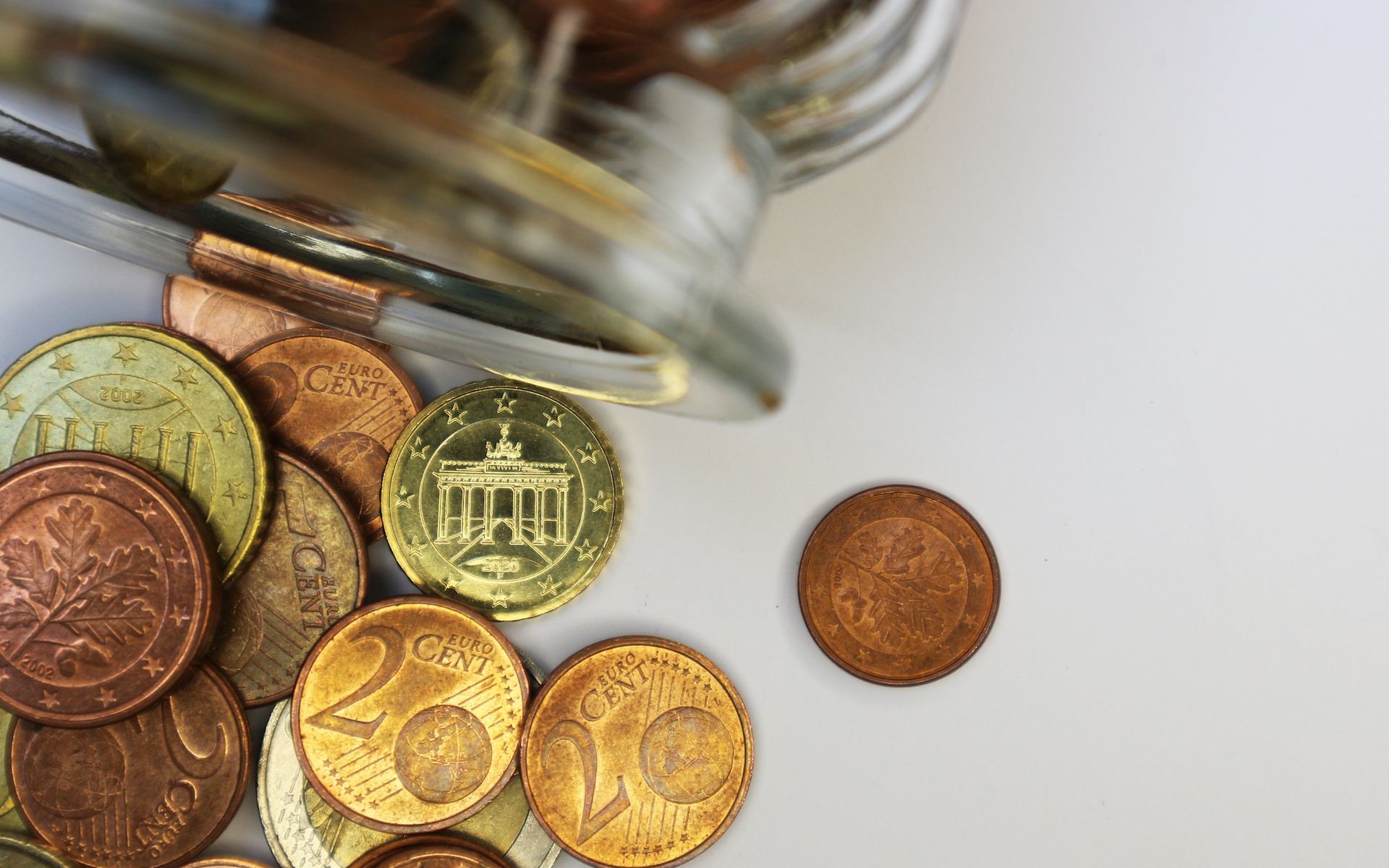
The coins we carry in our pockets are in many ways remarkable. Their heritage, as tokens of nominal value, stretches back to the very origins of trade. From the first crudely minted discs to today’s complex designs, coins have enabled more than mere exchange: they facilitate our movement, support complex transactions, and are founded on communal trust. In a sense, they are a physical embodiment of millennia of human industry and invention—the ultimate everyday symbol of our collective achievements.

And yet, how often do we stop to examine them? Unless you’re a numismatist like me, I suspect you seldom give them much thought. This is a pity, for their designs alone can remind us of what we owe to others and the past. On every US coin, for example, is minted the motto, e pluribus unum (Out of Many, One), which refers to the union of states and the idea that we are more than the sum of our parts.

In writing the essays in this book, I’ve come to reflect on my personal journey, not only as a leader in business but, more broadly, as a father, statistician, and sports fan. No matter how we define ourselves or measure our success, I’m more conscious than ever that unless we live like Robinson Crusoe, we must all give thanks and pay tribute to others. Those of us who’ve risen to senior positions have an even greater obligation to do so.

Working and Collaborating with Others Matters

Malcolm Gladwell, in his debut book, The Tipping Point, wrote of the importance of Mavens-those persons whose knowledge and wisdom plays a vital role in the adoption of popular trends. Often, in organizations and social movements, we can trace seminal decisions back to their influence. At a personal level, too, most of us can name individuals to whom-either directly or by way of a connected thread— we can link the progress and direction of our lives.

Early in my career, I was fortunate enough to work at a financial organization for a leader who combined the expectations of hard work and analysis with a softer side that took time to encourage a young man to make the most of his talents. It was through him that I first learned the value of communicating with care and the power of modesty as a means to motivate. He showed me, too-and with great patience on his part-that mistakes are part of our progress.

Firmness of Mind Matters, but so does Action 

Later, on my first appointment as a CEO, I was blessed with a chairman who taught me much about the need for the firmness of mind. Leadership—and indeed many of the big decisions in our lives can be beset by doubtful voices, which, if we allow them to become too loud, result only in mixed messages and vacillation. It was through him that I learned to marry an openness to new ideas with a necessary clarity of purpose and direction. As we’ve seen, Bertrand Russell, in The Conquest of Happiness, talked of something similar: when faced with conflicting options, he said we must act on the best available information and then hold to our decision unless or until there is clear evidence to the contrary.

The reference to Russell illustrates that great minds have never been more available to us. Bookshops and libraries are a wellspring of wisdom-so to the internet if we use it with care. In this respect, some of my mentors are people I’ve never met-and, yet through their works, I’m constantly learning, continually challenged, and forever curious. It has long struck me as a sadness that so many college graduates give up their studies to begin their careers. That’s not to say we should all be academics in our spare time, but maintaining that essential curiosity feeds and pays tribute to the wonderful gift that is our collective understanding.

Mentorship and Positive Role Models Matter

I learned this from my father, a quintessential polymath and my greatest mentor and friend in life; the debt I owe to him and his gentle influence cannot be overstated. Of course, when I say debt, I really mean gratitude, for, like all the best mentors, he would not wish for payment. This reminds me of a former colleague who had an unrelenting belief in our duty to make better decisions, always seeking to test and improve for the benefit of all. He was one of the most intelligent people I’ve ever met and yet, far from displaying the hubris of certainty, he tenaciously challenged the status quo, blending a scientific mindset with a kindness and warmth that spoke to and quietly enhanced—my personal values.

And isn’t this what great mentors do?

Epiphanies Happen but Not All the Time 

Very few of us experience a “Road to Damascus” moment that changes our outlook overnight. Indeed, my core beliefs in liberalism, meritocracy, and a duty of care to those less fortunate have not radically changed since my college days. But by learning from the perspectives and wisdom of others around me, those convictions have been enriched and refined. I hope this never ceases; I hope, too-as, they would remind me—that I remain open to the evangelism of a sort, for there is merit in radical thinking if we are to make step changes. Liberté, égalité, fraternité the motto of the French Revolution (and on the reverse of its Euro coins)-is a useful reminder that the values we hold most dear were once heretical thoughts.

But whether our knowledge is founded on education or epiphany makes little difference to our dues. Science and mathematics are a ten-thousand-year endeavor; democracy-and much of our philosophy-comes from ancient Greece; the very languages we use to communicate are founded on social constructs. Similarly, today, our industries, our health services, our transportation careers, and the opportunities which come with them are built on the efforts of our forebears and contemporaries.

In writing these essays, I’m clearer than ever that the idea of the self-made person is contradictory to an interdependent, multicultural, increasingly global world. We are, all of us, carried on the shoulders of giants. Even a genius like Leonardo da Vinci served as an apprentice; those of us less gifted are-in a sense-bound to a lifetime of learning from others. We should see that as joy-not a trial, as a credit, not a debit—in the balance sheet of life. Or perhaps, as two sides of the same coin-the many and the one, each dependent on the other.

The Banshees of Inisherin

Just occasionally, we come across something – a person, a performance, a project – that metaphorically hits us in the solar plexus. An encounter so stunning that it takes time to process; for all that, we intuit its significance, even if we don’t quite know why. The experience can be unsettling, and yet it’s compelling, too, reminding us that there’s more to life than the familiar paths and patterns we so easily follow.

By their very nature, we can’t know when these encounters will occur. This is why it’s so important to be open to new – and even challenging – possibilities. The idea that we’ll find fresh insight and invention every day is a sort of contradiction in terms. And while that might be comfortable for some, it’s not the route to growth – be it in business, in life, or simply in ourselves.   

In my case, the latest instance happened at the movies.

Banshees of Inisherin and Life’s Purpose

A few weeks ago, I went to see the magnificent (indeed, I’d go so far as to call it a masterpiece) Banshees of Inisherin. Directed by Martin McDonagh, the film has won a plethora of awards and is about as far from a Spielberg blockbuster as you could imagine. Yet, so impactful did I find it that I’ve replayed it in my mind ever since: its beauty, its layering, the dark comedy that compliments an unfolding as brutal as it is mesmeric. 

But the purpose of my writing here is not to critique the movie. You can find that elsewhere, and many of you may already have seen it. For those who haven’t, the narrative centers on the unraveling of a friendship in the background of the Irish Civil War. It explores themes of life’s purpose, despair, honesty, and humanity – and in truth, that’s a shortened list, for I could just as easily have chosen retribution, fate, or even mythology. And if all that sounds complex, then I guess it is.

Quality Comes at a Price 

But then, that’s the way with quality; it’s never fake or superficial, which means it invariably comes at a price. The cost isn’t necessarily financial; it might be cerebral or emotional, requiring tough choices or letting go of that which we yearn to hold onto. As I write, I’m aware these too are themes of the film…. But aren’t they also themes of life and love and (dare I say it) even leadership, in its broadest sense? 

Quality is Linked to Care

Robert Pirsig, who wrote Zen and The Art of Motorcycle Maintenance, argued that quality was inextricable from care; that almost anything we do is better experienced – or managed – if we have a deeply felt concern for the issue at hand. And while I can’t prove that theory, I can sense its intuitive wisdom. Perhaps the genius of the Banshees of Inisherin is that as I watched — at times open-mouthed — I felt the agony of the characters and was so desperately sad at the inevitability of their fates – even that of the poor wee donkey!

There’s No Going Back

The ending, like this piece, is open to interpretation. But one message is clear: we can’t undo the past, just as I can’t un-watch the film. The truth is, some choices are so significant — and some events so seminal —that there’s no going back. That’s not a reason not to make them, though, because, unsettling though they are, they are also the ones that make life worth the candle. 

Match of The Day and the Whistle of Free Speech

opdeweegh pool party

This weekend, the BBC’s flagship soccer or football program, Match of the Day, aired without any of its celebrity presenters. For almost sixty years, MOTD has been the most popular football show in the UK and, indeed, worldwide. Its long-time host, Gary Lineker is a national hero and former winner of the Golden Boot, the equivalent of the Most Valuable Player in the League – he’s also a vocal user of social media, with a following that matches his public profile. And it is this that has brought him into conflict with his employer. 

What happened with Match of the Day and Lineker

Last week, Lineker posted a personal tweet expressing heartfelt outrage at the UK Government’s proposals to deport thousands of migrants and asylum seekers to Rwanda or their country of origin. He believes the policy to be ‘immeasurably cruel’ and said as much; the BBC, in its turn, suspended him from the air, and his co-host refused to act as stand-in.

The Match of the Day Fall-Out 

In events reminiscent of a satirical farce, the situation has been so mismanaged that other presenters and journalist withdrew their services, resulting in the cancellation of several more flagship programs. The BBC hierarchy has been widely criticized for heavy-handed tactics, selective application of its policies, and a blind spot to the optics of its own inconsistencies —not the least of which is its Chairman’s role in arranging an £800,000 loan to former Prime Minister Boris Johnson.

All these issues have been extensively reported in the UK press, and as I write the situation may yet take a different turn. What’s more, I recognize that any summary of this sort risks omitting or emphasizing certain subtleties, for which I would ask your understanding. I’m merely trying to précis the background so that we can proceed to more material discussion.

And what is certainly agreed by all sides is that concern over immigration and how best to manage the number of arrivals is one of the most contentious in UK politics, cutting through party lines and dividing opinion across the entire social spectrum.  It’s therefore not surprising that Lineker, as with millions of others, has a strongly held opinion on the Government’s proposals.  

The difficulty, according to the BBC, is not his right to have a view but its statutory duty to be politically impartial. The Corporation claims that because of Lineker’s unique public profile, he must remain silent on politically sensitive issues, even when speaking as a private individual, on channels that have no connection to the public service and regardless that he is a freelance contractor and a sporting personality, not a directly employed current affairs commentator. 

Lineker is Right

For the record, I agree with the thrust of Lineker’s comments. The Government’s policy strikes me as ill-considered and lacking in the compassion I’d expect from one of the world’s richest nations. I make this declaration for reasons that I will come back to later but it should be clear that arguing for one side or the other on this policy divide is not the purpose or central thread of this article. If in the meantime, you get hung up on my particular view, you will be missing the point!

The Big Issue with the Lineker Debacle

For the heart of the matter that concerns me – and the bigger issue that I believe the Lineker debacle raises —is whether it’s a good or bad thing that our public figures (including those with profiles on the BBC) feel able to speak freely on political matters.  This is a separate issue to whether Lineker is right or wrong in their assessment of the Government’s policies. 

Rather, it is a question of whether, by limiting the freedom of its contracted presenters to express opinions offline and off the air, the BBC is undermining our wider responsibility to promote the robust and respectful debate that is critical to the proper functioning of a democracy.

In Defense of Free Speech

The late Christopher Hitchens was a Neo-Marxists whose views on many matters I disagree with strongly. But he was spot on in his passionate and very public defense of freedom of expression. Opinions that offend or appear plainly ridiculous ought never to be shut down, he said. Rather they should, in a sense, be encouraged and then countered with the robust argument that shows them to be false, illogical, prejudiced… or, in rarer cases, to acknowledge they may have some grain of truth from which we might learn. 

Hitchens, who died in 2011, was fully aware of the potentially divisive and, at times, the disproportionate impact of platforms like Twitter, and yet he never once averred from his view that free speech was worth whatever discomfort and difficulties it caused – even to the BBC!

Social Media Trolls Stifle Debate 

We live today in a world that has more channels and platforms for opinion and debate than ever before.  And yet, many of our most knowledgeable individuals, who could add so much to intelligent debate —and especially those with a public or corporate profile—are deeply reluctant to engage, fearing the backlash of social media trolls, cancel culture, and the Lord of the Flies mentality that’s typical of pressure groups that show no respect for the underlying freedoms that allows them to pursue their own particular agendas.  The hounding of those who dare to express polarizing opinions is well known, but it’s clear the reluctance to speak out now goes much wider than just these issues.

Everyone Should be Concerned about the Public Discourse  

This should concern us all far more than the BBC’s supposed pursuit of impartiality.

To put it plainly, we are now so impoverished in our public debate of sensitive issues that we need to encourage and not dissuade our public figures and influencers from speaking out. To do so, we need institutions like the BBC to be leaders in showing that it’s possible for public figures to express an opinion without vilification, threats of losing their job, or suggestions that they ‘get back in their box’. Indeed, unless there are overwhelming public interest considerations, I’d suggest that promoting free speech and supporting (even celebrating) those with the courage to speak their mind should trump supposed impartiality every time.

I support Lineker’s Comments 

Which is why I declared my hand earlier in support of Lineker’s comments. Not because my views matter in the scheme of things, but because we have to start somewhere – and if I’m writing this piece, then I need to live by that value too. Indeed, let me go further: I believe the immigration policies of the UK to be deplorable, the influence of politics on the BBC unacceptable, and Gary Lineker is absolutely correct in what he states. His 1930s comparisons may be hyperbolic, but he is absolutely on the right side of this argument, which is shameful in a constitutional democracy. 

That is strongly put and deliberately so.  The central point I’m making is that if you disagree with me, let’s not cancel the discussion—let’s exchange views, enrich the debate, agree to disagree…  That’s what healthy and respectful democracy is about, and we are all of us better off for its flourishing, which is why I say more power to Lineker and his like.  Living with a little tension in the corridors of the BBC is a small price to pay for a public discourse that isn’t cowed by cancel culture or sanitized by the powers that be. 

In fact, to my mind, that’s what true public service broadcasting is meant to achieve.